Notes › MATH 5441: Financial Mathematics Lecture 3
Effective Interest Rate
668 words 8 min Modified
Table of Contents
EIR
- The current definition of interest (amount value minus principal) is not good for analyzing profitability
- We need a better definition that uses $a(t)$
The amount that one unit invested at the beginning of a period will earn during the period, with interest paid at the end of the period.
$$i = a(1) - a(0) = a(1) - 1$$Written in terms of $A(t)$:
$$\frac{A(1)-A(0)}{A(0)} = \frac{I}{A(0)}$$- Alternative definition:
- The amount of interest gained during a period divided by the principal at the beginning of the period
- For the $n$th time period:
- Note: $I_n$ is the amount of growth in the period whereas $i_n$ is the rate of growth
- In terms of $a$:
(Example 3.1
[Finan, A Basic Course in the Theory of Interest and Derivatives Markets, p. 26])
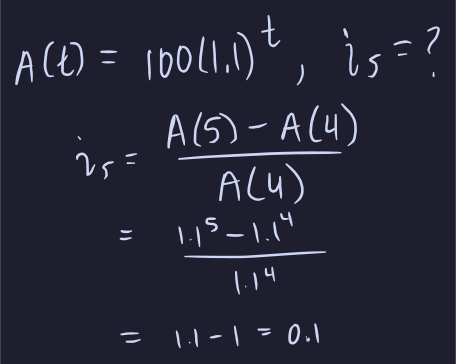
- The fund at the end of the $n$th period equals the fund at the beginning of the period plus the interest earned during the period
- This leads to:
(Example 3.2
[Finan, A Basic Course in the Theory of Interest and Derivatives Markets, p. 26])
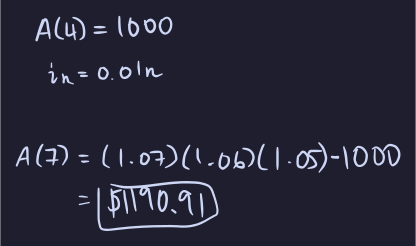
(Example 3.3
[Finan, A Basic Course in the Theory of Interest and Derivatives Markets, p. 27])
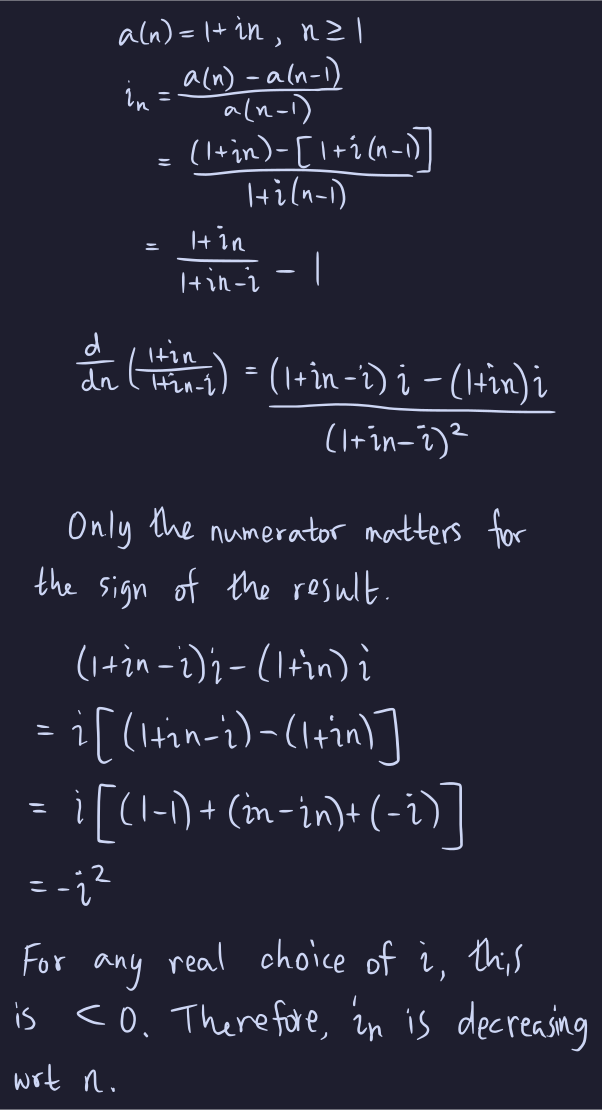
(Example 3.4
[Finan, A Basic Course in the Theory of Interest and Derivatives Markets, p. 27])
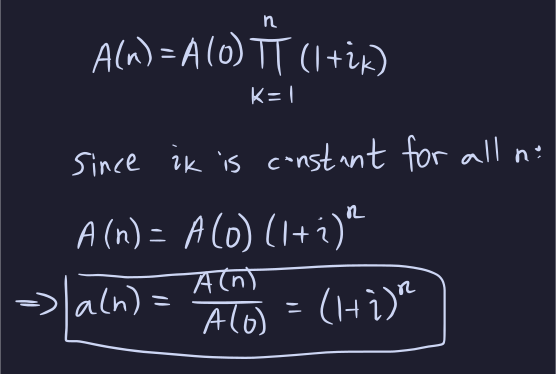
Negative Interest Rates
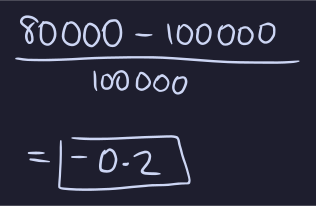
- $i$ can be $< 0$ if $a$ is decreasing (which also means $A$ is decreasing)
(Example 3.5
[Finan, A Basic Course in the Theory of Interest and Derivatives Markets, p. 27])
Practice
(Problem 3.1
[Finan, A Basic Course in the Theory of Interest and Derivatives Markets, p. 29])
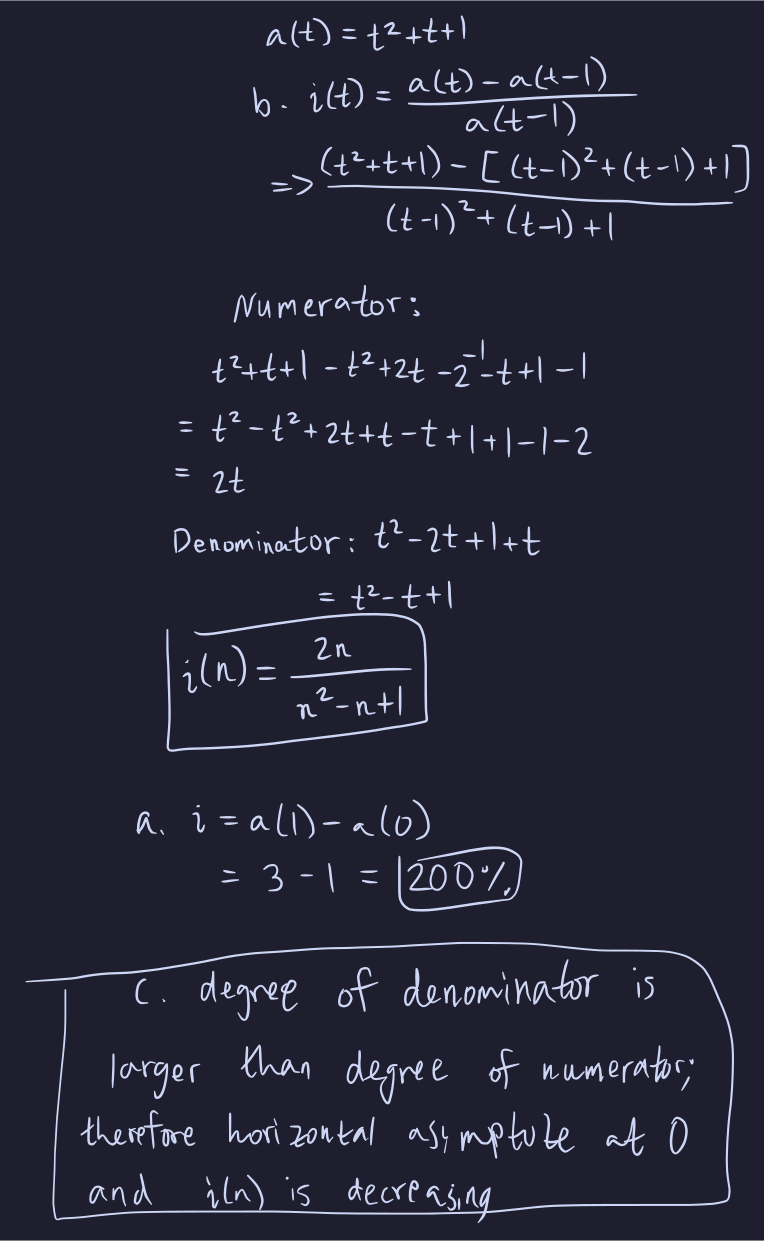
(Problem 3.2
[Finan, A Basic Course in the Theory of Interest and Derivatives Markets, p. 29])
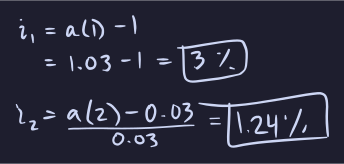
(Problem 3.3
[Finan, A Basic Course in the Theory of Interest and Derivatives Markets, p. 29])
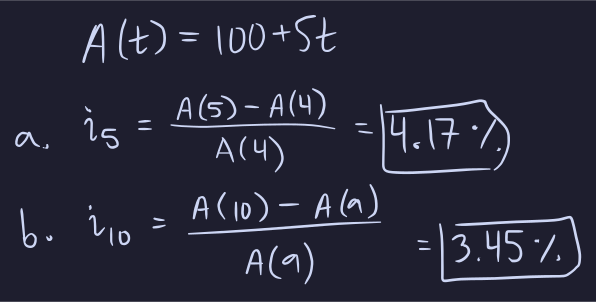
(Problem 3.4
[Finan, A Basic Course in the Theory of Interest and Derivatives Markets, p. 29])
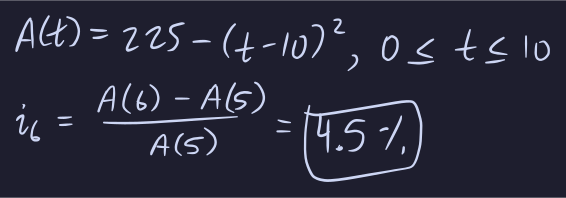
(Problem 3.5
[Finan, A Basic Course in the Theory of Interest and Derivatives Markets, p. 29])
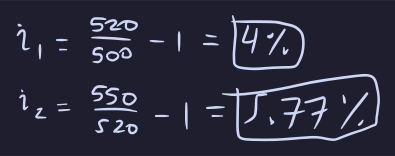
(Problem 3.6
[Finan, A Basic Course in the Theory of Interest and Derivatives Markets, p. 29])
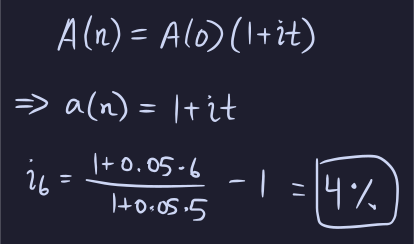
(Problem 3.7
[Finan, A Basic Course in the Theory of Interest and Derivatives Markets, p. 29])
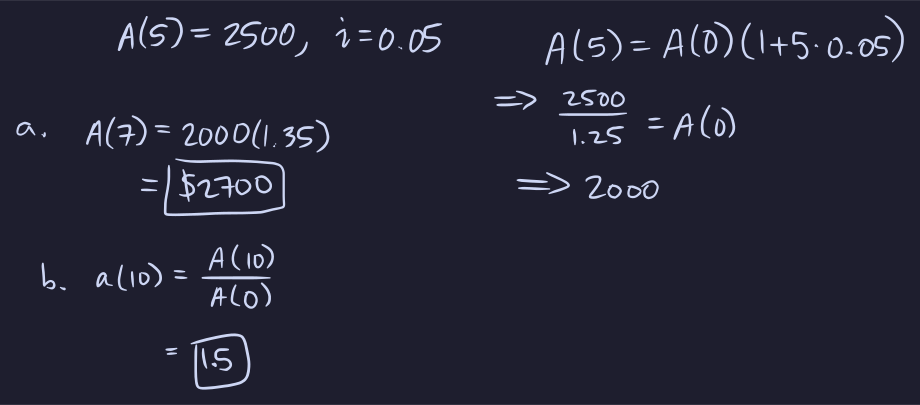
(Problem 3.8
[Finan, A Basic Course in the Theory of Interest and Derivatives Markets, p. 29])
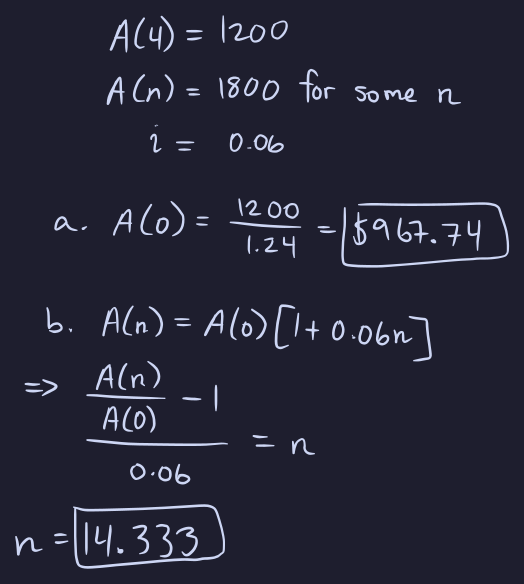
(Problem 3.9
[Finan, A Basic Course in the Theory of Interest and Derivatives Markets, p. 30])
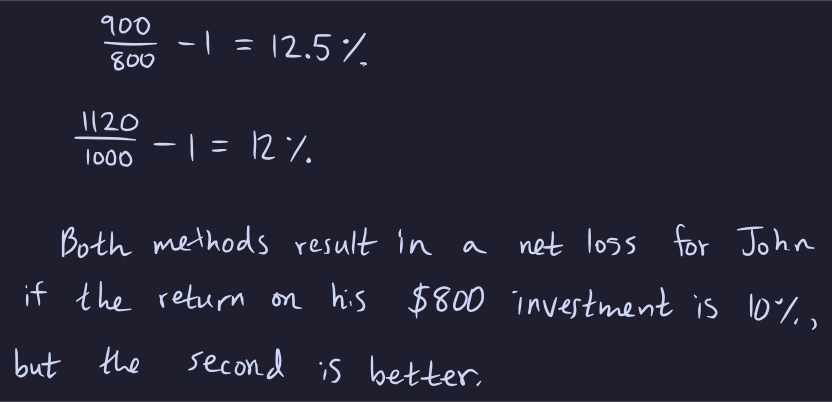
(Problem 3.10
[Finan, A Basic Course in the Theory of Interest and Derivatives Markets, p. 30])
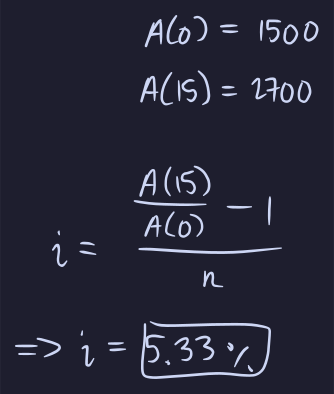
(Problem 3.11
[Finan, A Basic Course in the Theory of Interest and Derivatives Markets, p. 30])
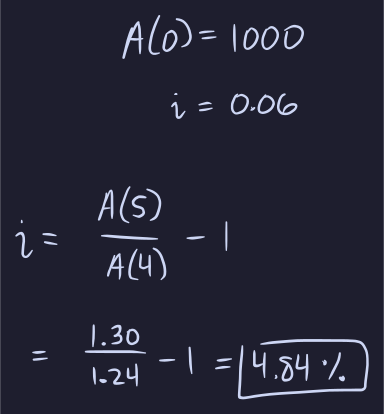
(Problem 3.12
[Finan, A Basic Course in the Theory of Interest and Derivatives Markets, p. 30])
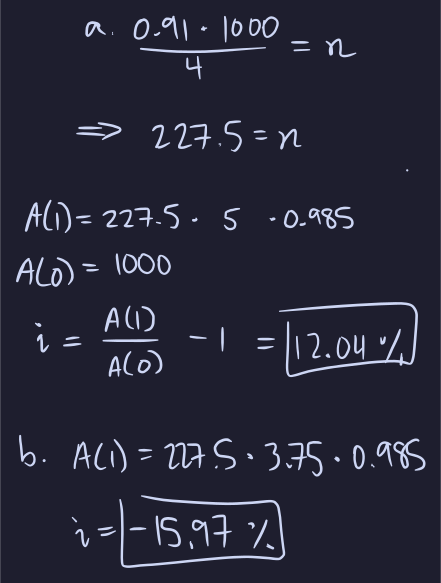
(Problem 3.13
[Finan, A Basic Course in the Theory of Interest and Derivatives Markets, p. 30])
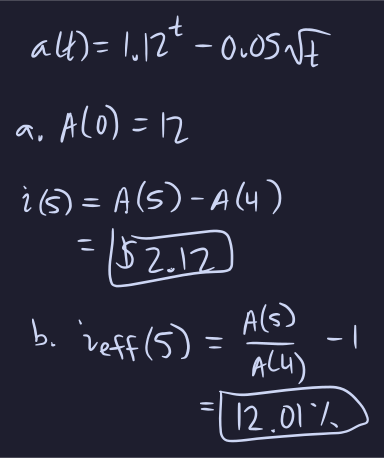
(Problem 3.14
[Finan, A Basic Course in the Theory of Interest and Derivatives Markets, p. 30])
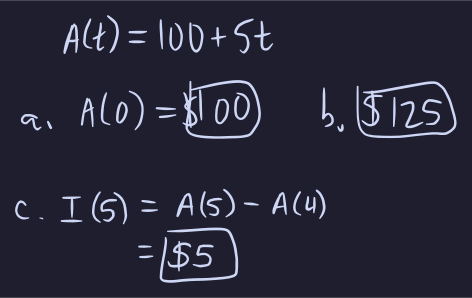
(Problem 3.15
[Finan, A Basic Course in the Theory of Interest and Derivatives Markets, p. 31])
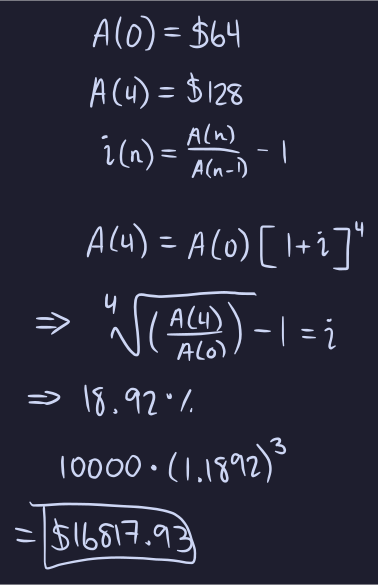
(Problem 3.16
[Finan, A Basic Course in the Theory of Interest and Derivatives Markets, p. 31])
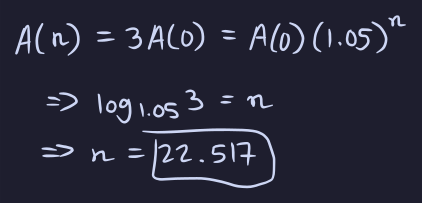
(Problem 3.17
[Finan, A Basic Course in the Theory of Interest and Derivatives Markets, p. 31])

(Problem 3.18
[Finan, A Basic Course in the Theory of Interest and Derivatives Markets, p. 31])
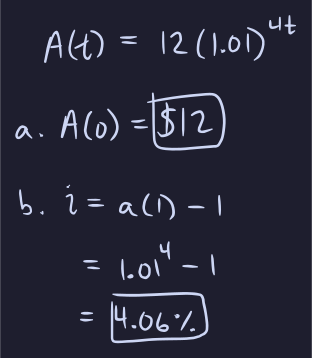
(Problem 3.19
[Finan, A Basic Course in the Theory of Interest and Derivatives Markets, p. 31])
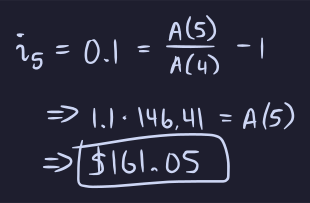
(Problem 3.20
[Finan, A Basic Course in the Theory of Interest and Derivatives Markets, p. 31])
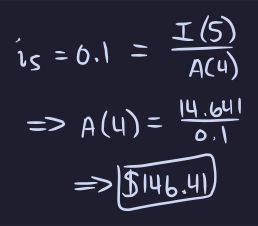
(Problem 3.21
[Finan, A Basic Course in the Theory of Interest and Derivatives Markets, p. 31])
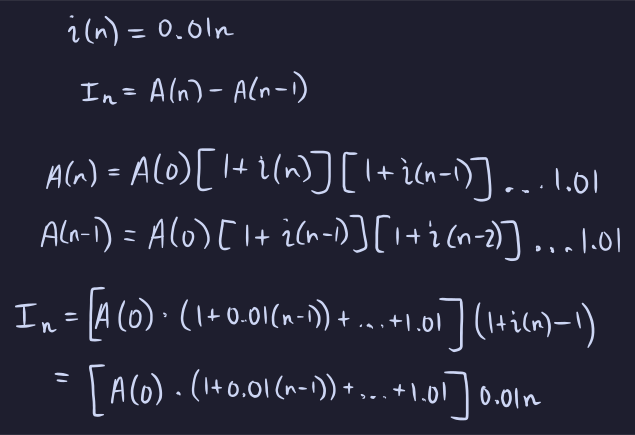
(Problem 3.22
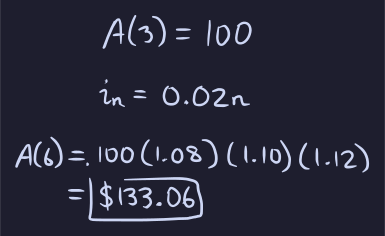
[Finan, A Basic Course in the Theory of Interest and Derivatives Markets, p. 31])
Sources
- Finan, A Basic Course in the Theory of Interest and Derivatives Markets