Notes › MATH 5441: Financial Mathematics Lecture 2
Accumulation and Amount Functions
753 words 9 min Modified
Table of Contents
Amount Function
- Characterizes the amount value $A$ with time $t$
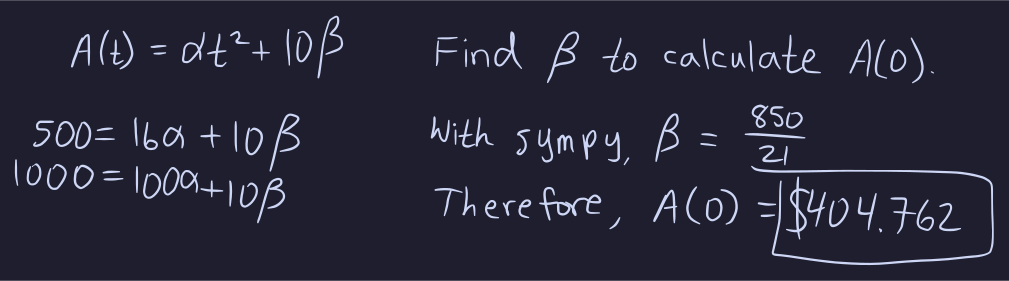
- $A(0) = P$
Accumulation Function
- Characterizes how much the principal has accumulated with time
- A simple ratio of the amount function and the principal
- Represents the factor by which the principal has grown
- This means $A(t)$ is just a constant multiple of $a(t)$; specifically, the proportionality constant is $A(0)=P$
(Example 2.1
[Finan, A Basic Course in the Theory of Interest and Derivatives Markets, p. 15])
Properties
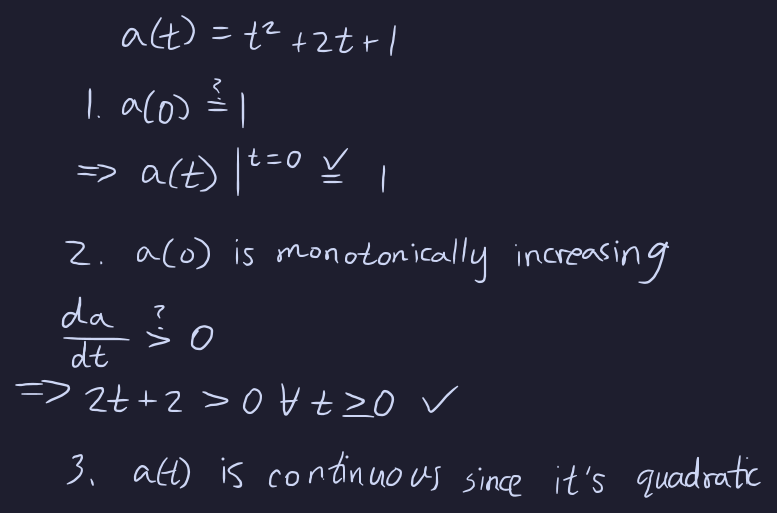
- $a(0) = 1$ by definition
- Always monotonically increasing
- Decreasing $a(t)$ implies negative interest
- $a(t) = C$ for all $t$ implies zero interest
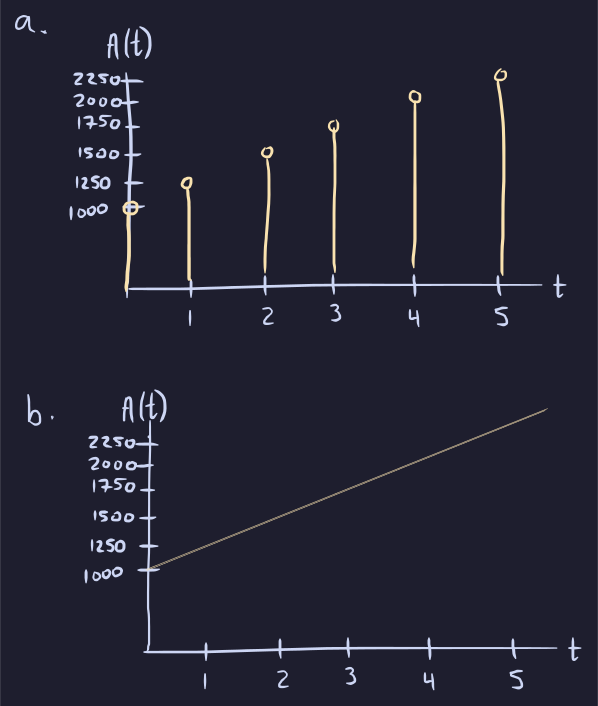
- May be continuous or discontinuous
- If $a(t)$ is continuous, then interest accrues for fractional values of $t$
- If $a(t)$ is discontinuous, then interest does not accrue between payment dates; the function will stay constant between measurement periods and then jump when interest is added as a step function
- Since $A(t)$ is a positive multiple of $a(t)$ and $a(t)$ is increasing, properties 2/3 must hold for $A(t)$ as well
(Example 2.2
[Finan, A Basic Course in the Theory of Interest and Derivatives Markets, p. 16])
Accumulation Factor
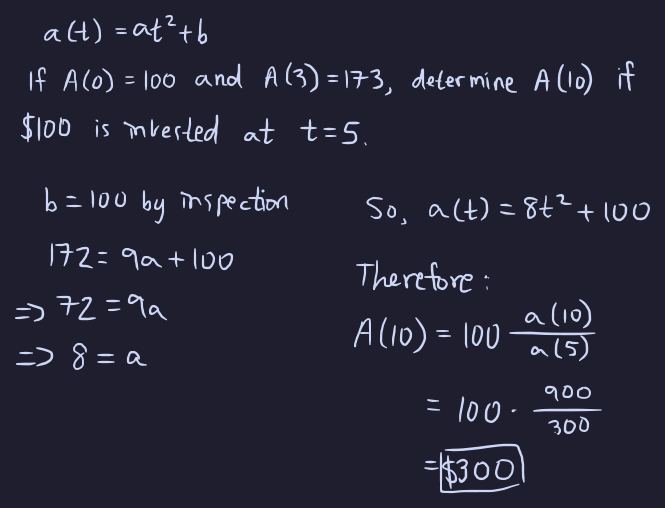
- Suppose we want to deposit a principal $k$ at a non-zero time $s$
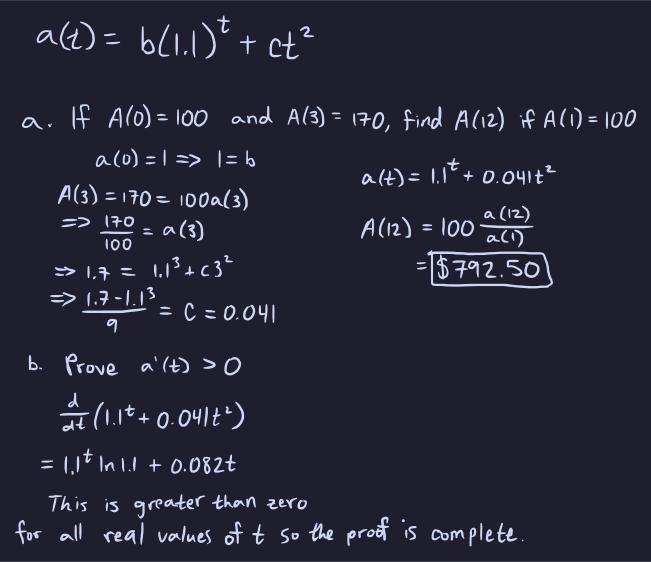
- Then, the accumulated value of $k$ for any $t > s$ is $k \frac{a(t)}{a(s)}$
- This ratio is referred to as the accumulation factor, and it represents the factor at which the principal grew from time $s$ to $t$
(Example 2.4
[Finan, A Basic Course in the Theory of Interest and Derivatives Markets, p. 17])
Time Intervals
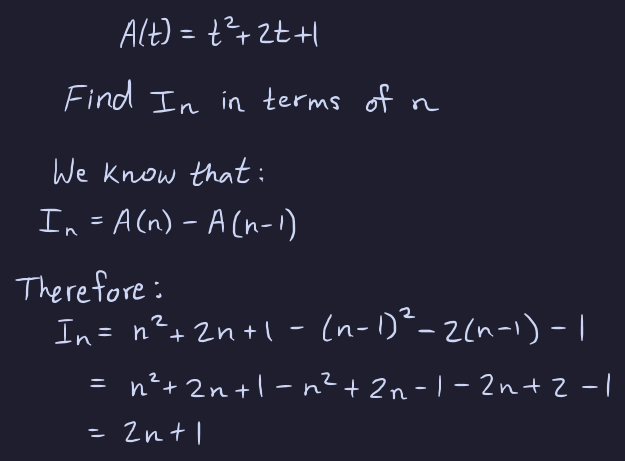
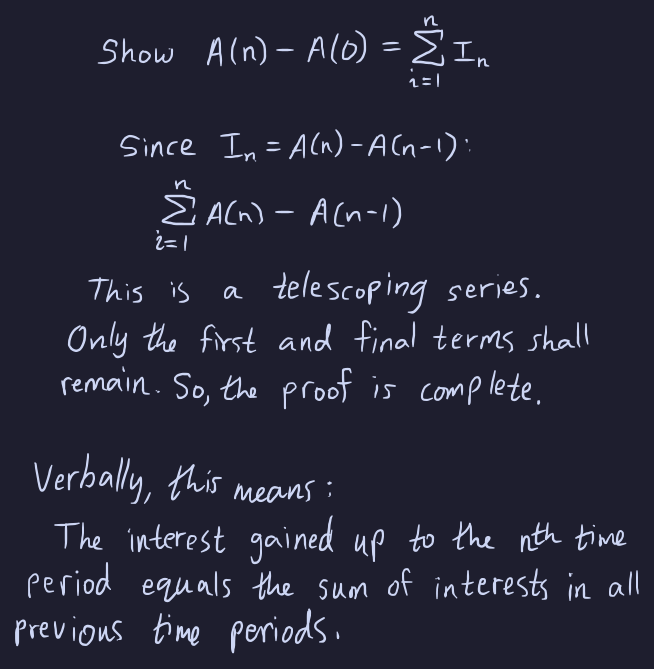
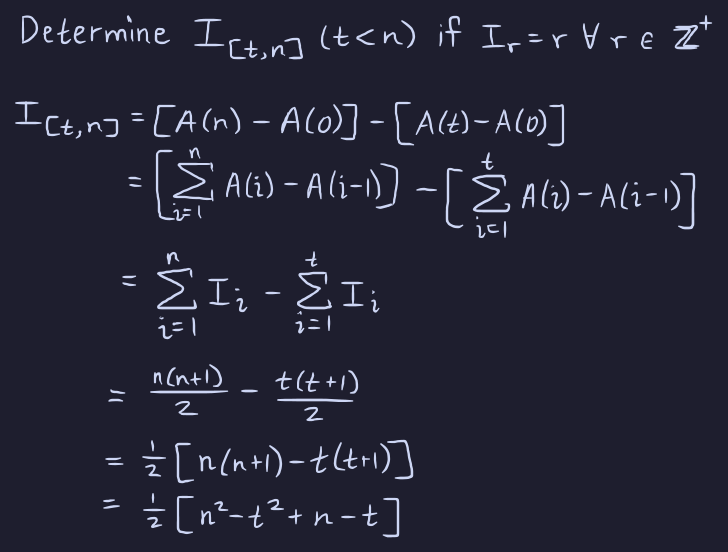
- The $n^{\text{th}}$ time period is $\{t\ |\ n-1 \le t \le n\}$
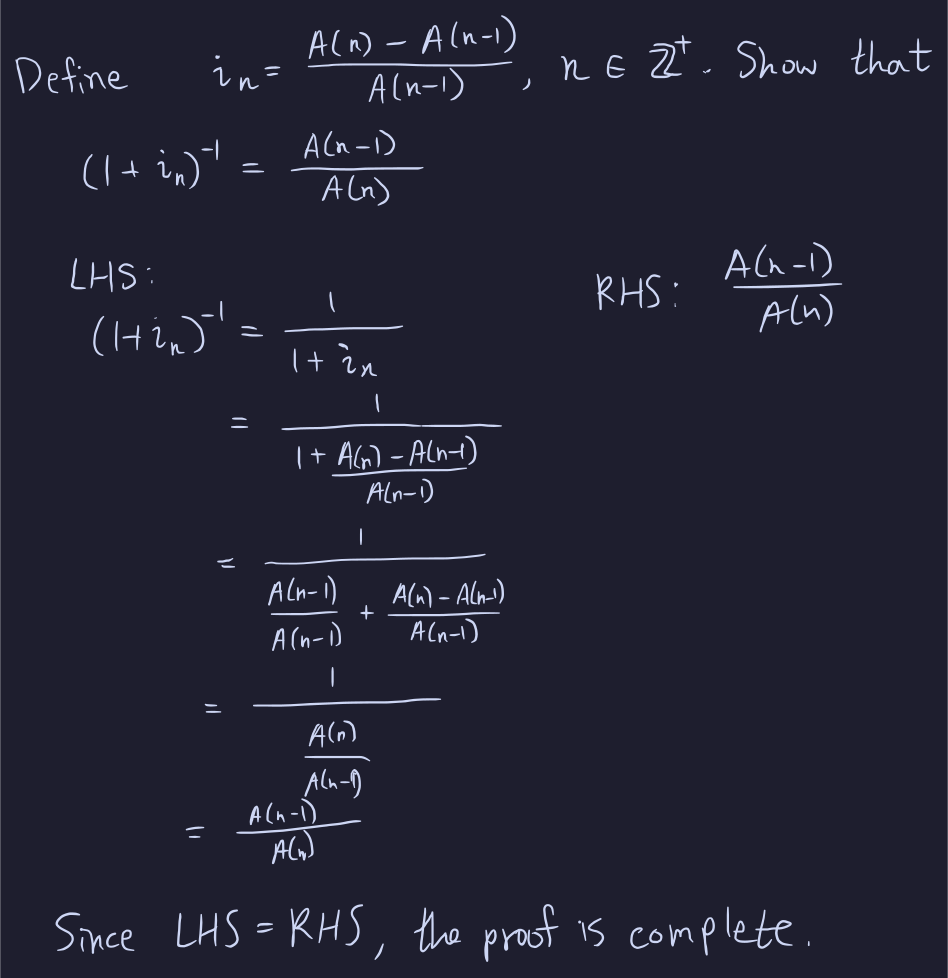
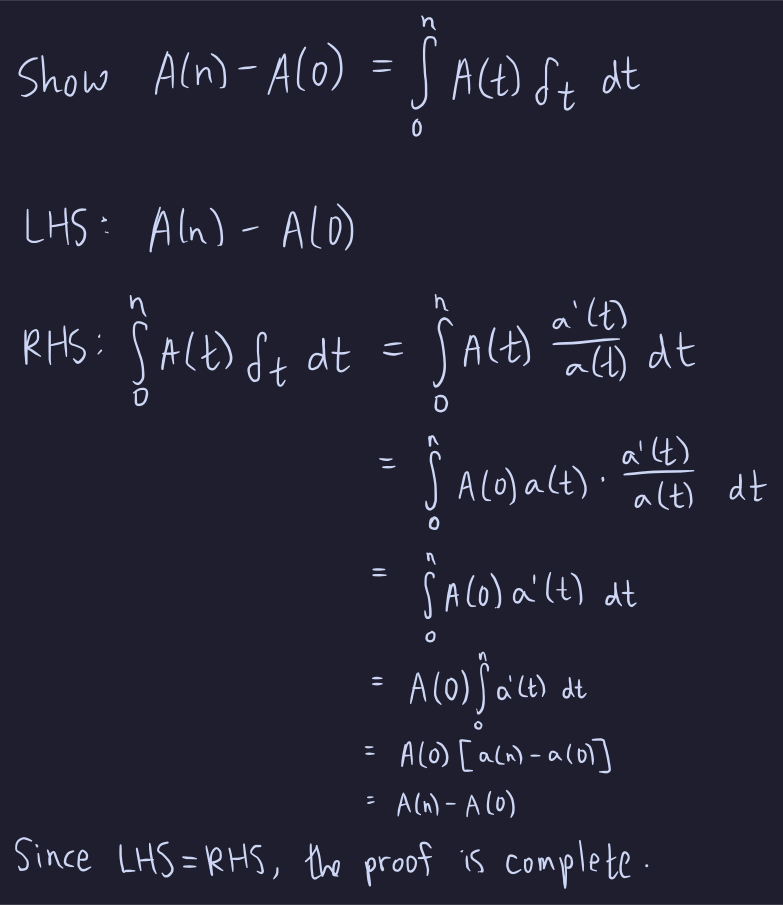
- The interest earned in this time period is $I_n = A(n) - A(n-1)$
- “Final amount value minus initial amount value”
(Example 2.5
[Finan, A Basic Course in the Theory of Interest and Derivatives Markets, p. 19])
(Example 2.6
[Finan, A Basic Course in the Theory of Interest and Derivatives Markets, p. 19])
(Example 2.7
[Finan, A Basic Course in the Theory of Interest and Derivatives Markets, p. 19])
Practice
(Problem 2.1
[Finan, A Basic Course in the Theory of Interest and Derivatives Markets, p. 21])
(Problem 2.2
[Finan, A Basic Course in the Theory of Interest and Derivatives Markets, p. 21])
(Problem 2.3
[Finan, A Basic Course in the Theory of Interest and Derivatives Markets, p. 21])
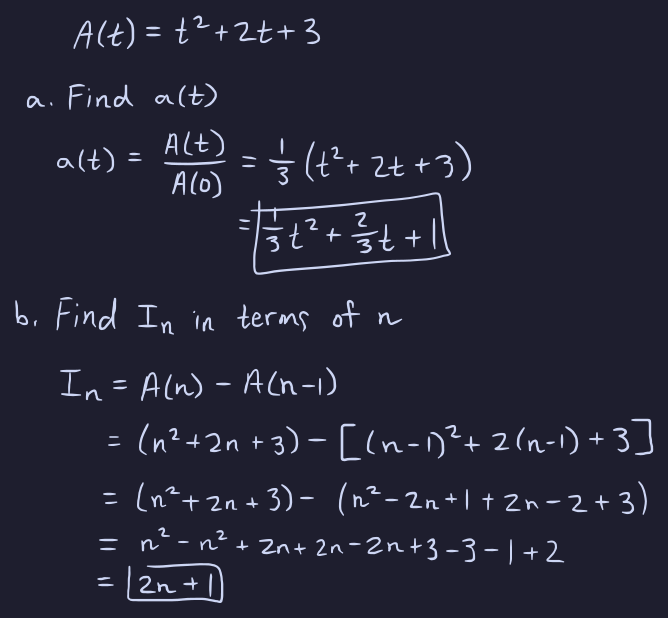
(Problem 2.4
[Finan, A Basic Course in the Theory of Interest and Derivatives Markets, p. 21])
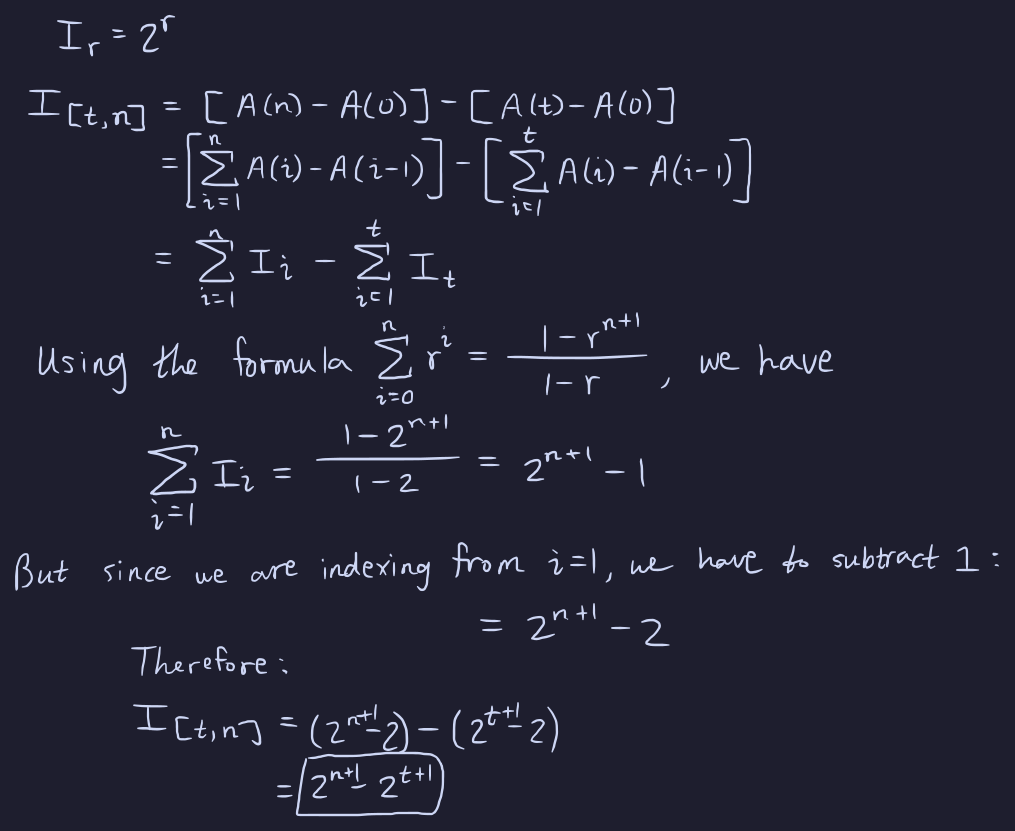
(Problem 2.5
[Finan, A Basic Course in the Theory of Interest and Derivatives Markets, p. 21])
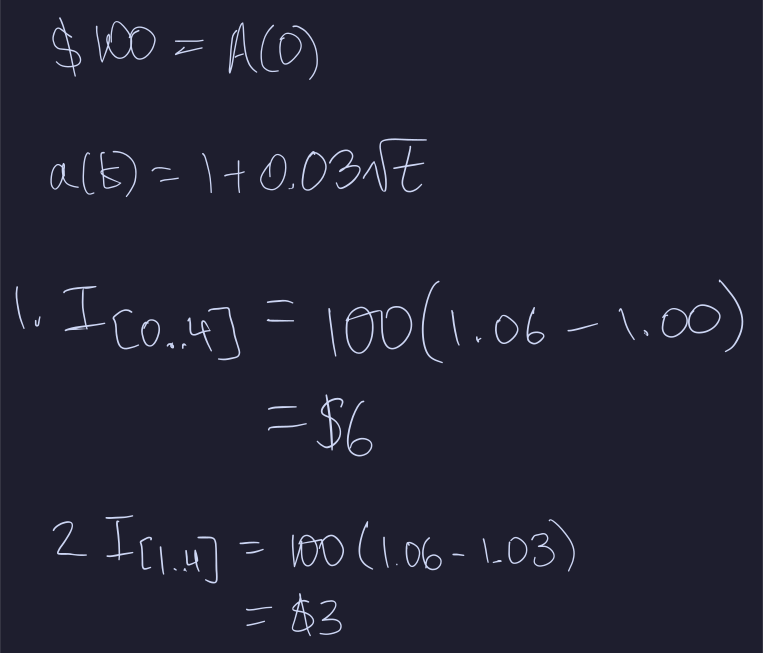
(Problem 2.6
[Finan, A Basic Course in the Theory of Interest and Derivatives Markets, p. 21])
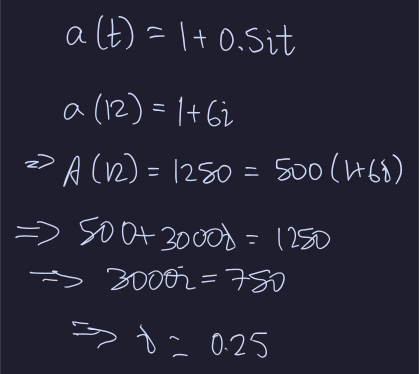
(Problem 2.7
[Finan, A Basic Course in the Theory of Interest and Derivatives Markets, p. 21])
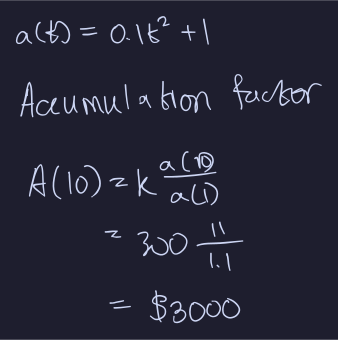
(Problem 2.8
[Finan, A Basic Course in the Theory of Interest and Derivatives Markets, p. 22])
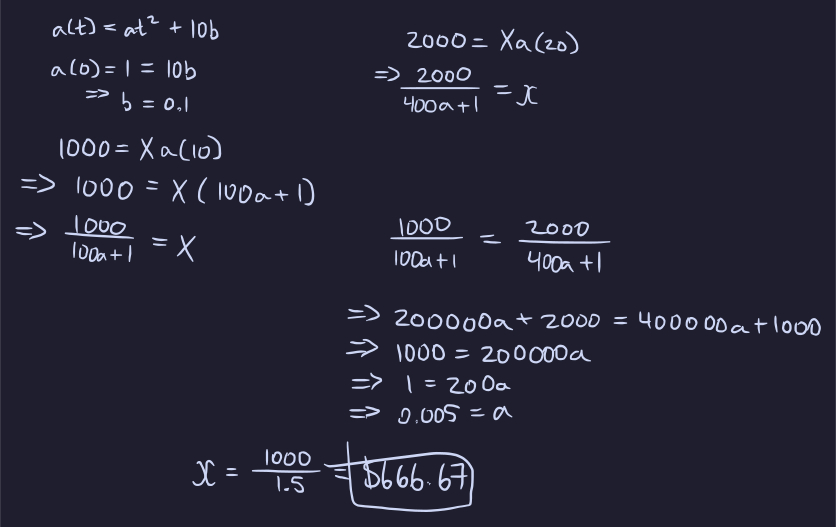
(Problem 2.9
[Finan, A Basic Course in the Theory of Interest and Derivatives Markets, p. 22] and Problem 2.10
[Finan, A Basic Course in the Theory of Interest and Derivatives Markets, p. 22])
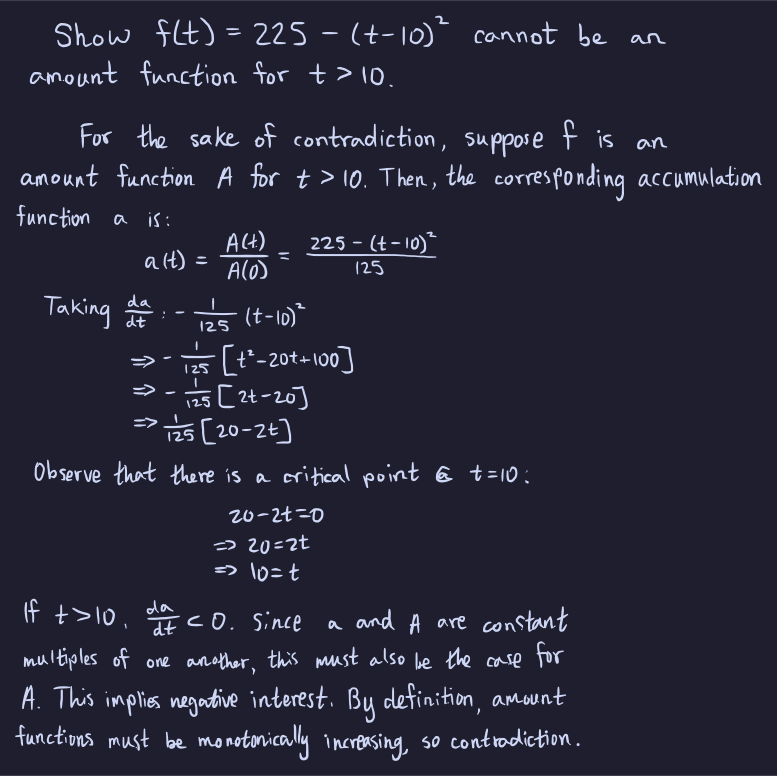
(Problem 2.11
[Finan, A Basic Course in the Theory of Interest and Derivatives Markets, p. 22])
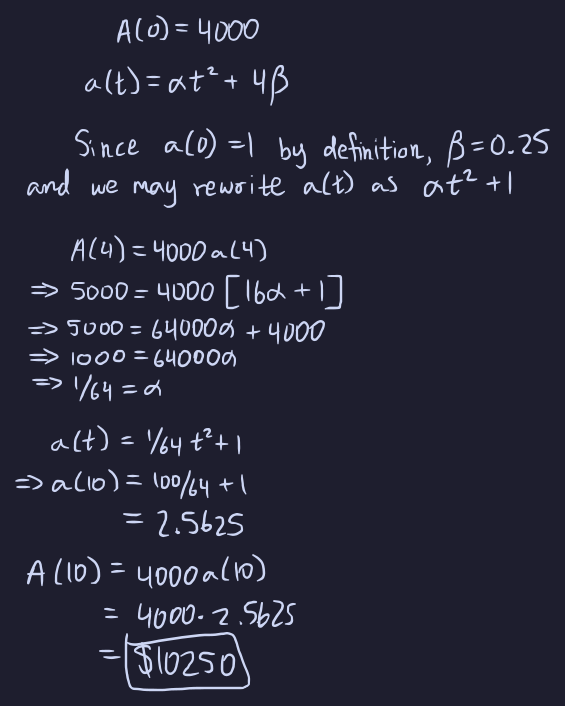
(Problem 2.12
[Finan, A Basic Course in the Theory of Interest and Derivatives Markets, p. 22])
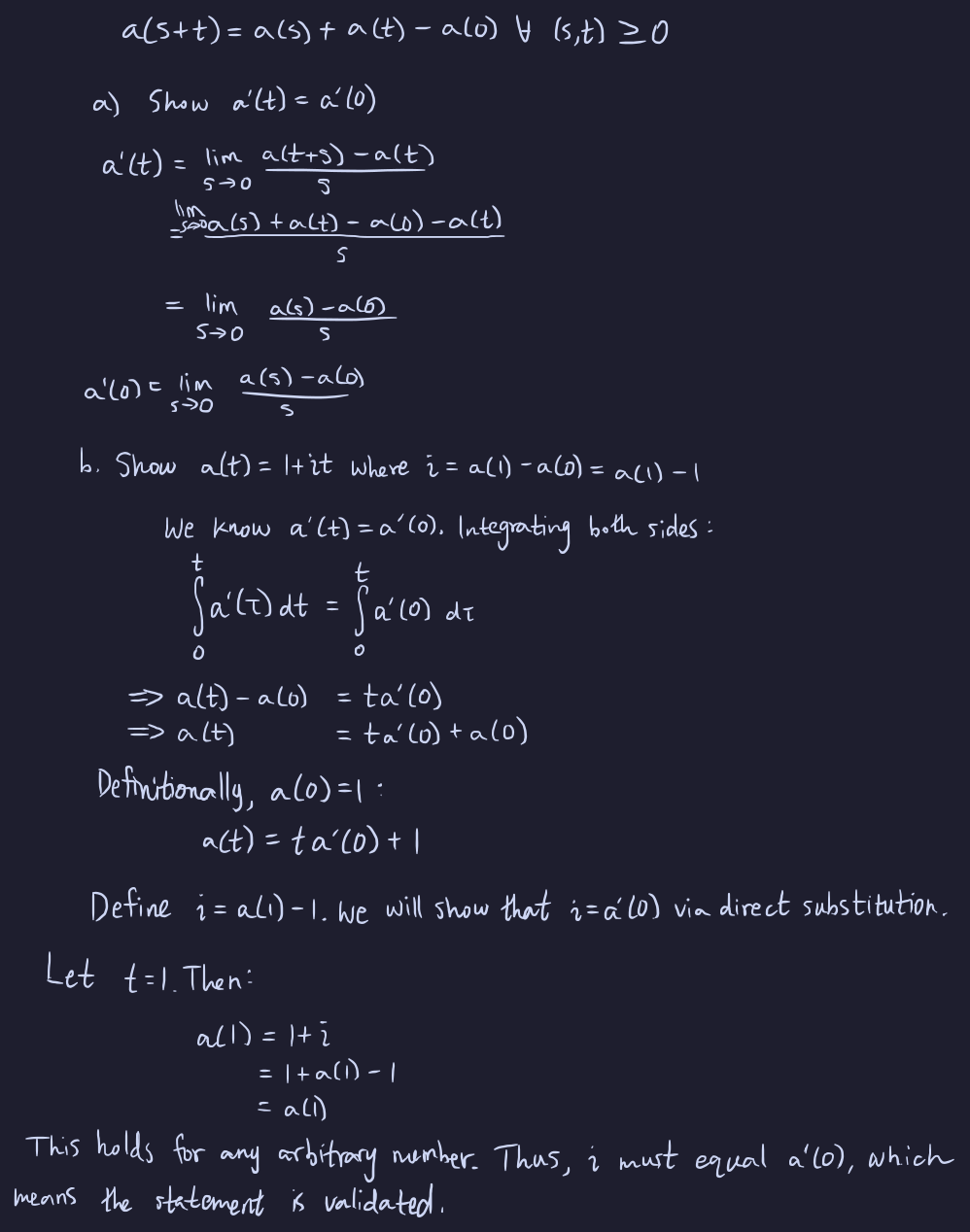
(Problem 2.13
[Finan, A Basic Course in the Theory of Interest and Derivatives Markets, p. 22])
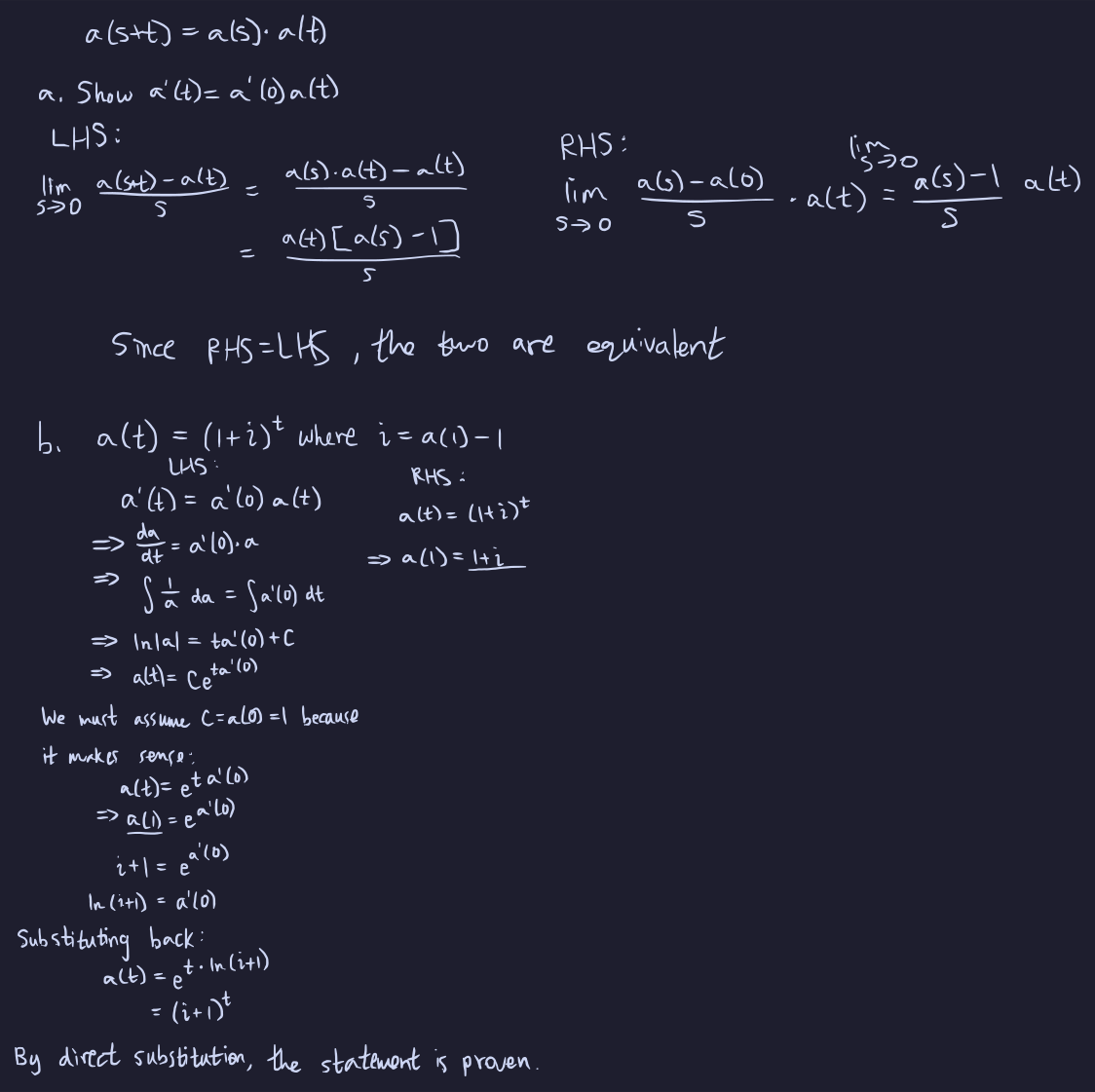
(Problem 2.14
[Finan, A Basic Course in the Theory of Interest and Derivatives Markets, p. 23])
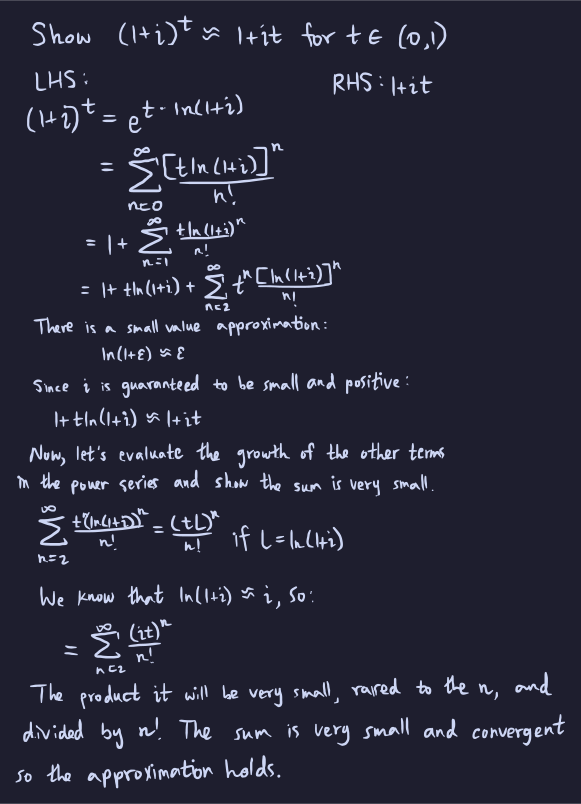
(Problem 2.15
[Finan, A Basic Course in the Theory of Interest and Derivatives Markets, p. 23])
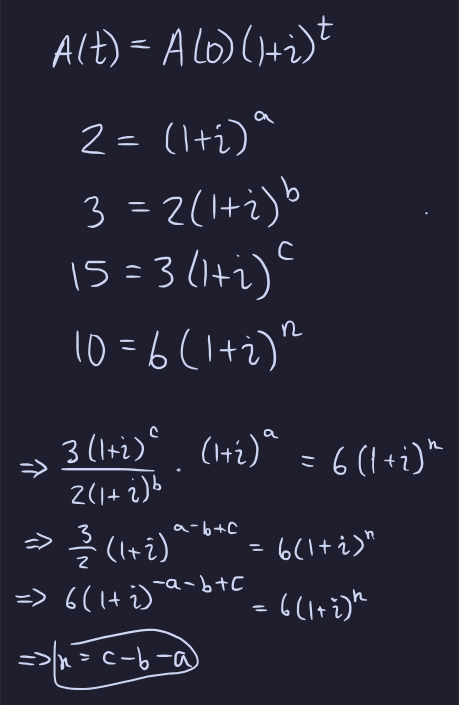
(Problem 2.16
[Finan, A Basic Course in the Theory of Interest and Derivatives Markets, p. 23])
(
(Problem 2.17
[Finan, A Basic Course in the Theory of Interest and Derivatives Markets, p. 23])
(Problem 2.18
[Finan, A Basic Course in the Theory of Interest and Derivatives Markets, p. 23])
(Problem 2.19
[Finan, A Basic Course in the Theory of Interest and Derivatives Markets, p. 23])
(Problem 2.20
[Finan, A Basic Course in the Theory of Interest and Derivatives Markets, p. 24])
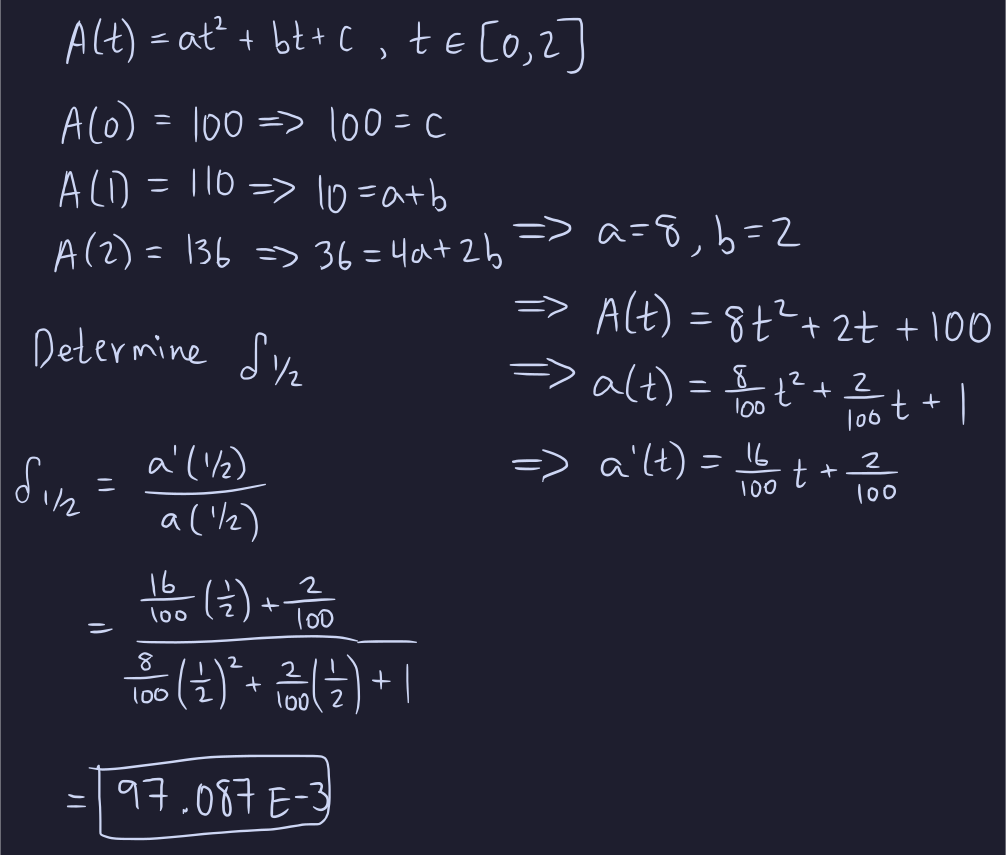
(Problem 2.21
[Finan, A Basic Course in the Theory of Interest and Derivatives Markets, p. 24])
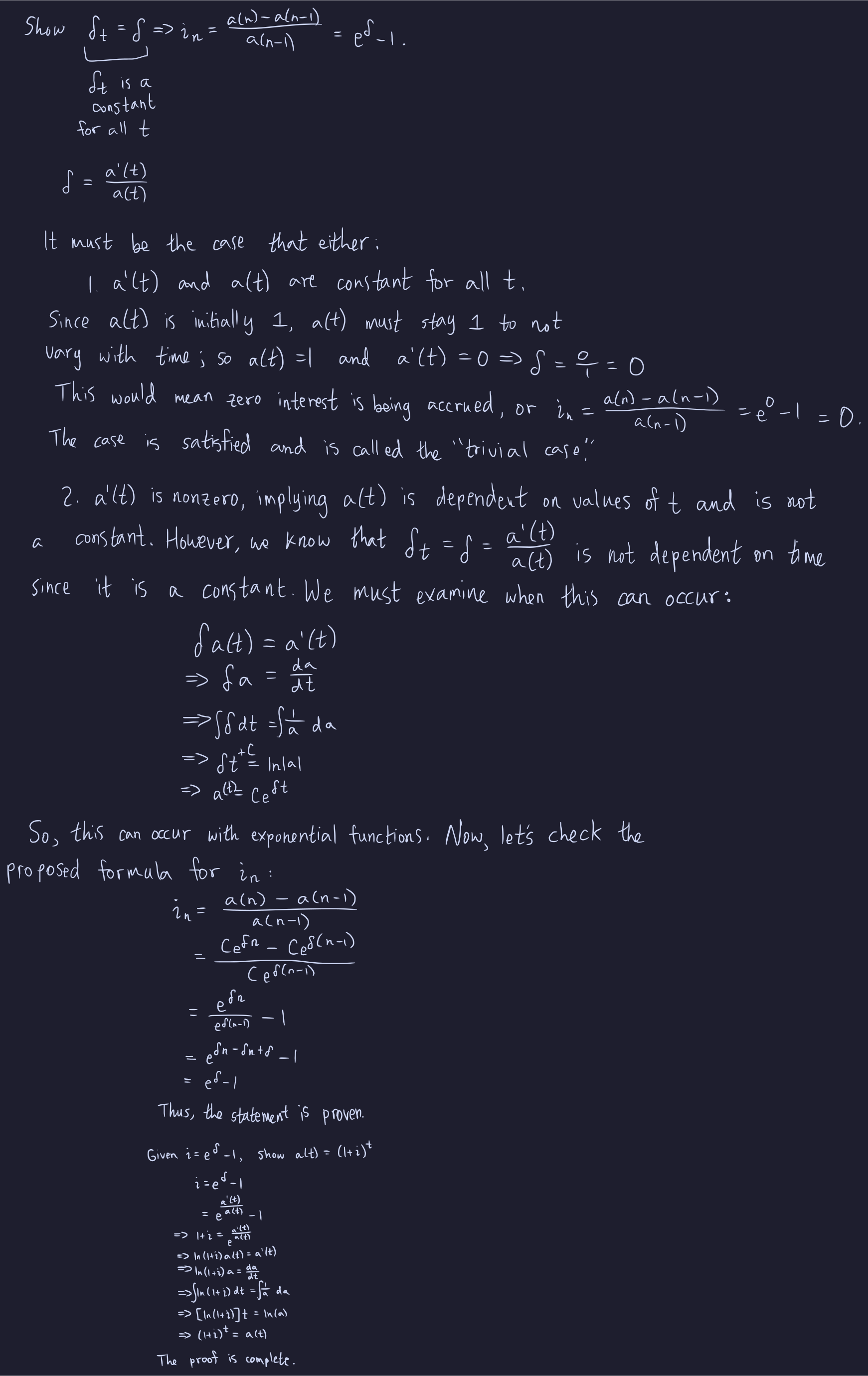
(Problem 2.22
[Finan, A Basic Course in the Theory of Interest and Derivatives Markets, p. 24])
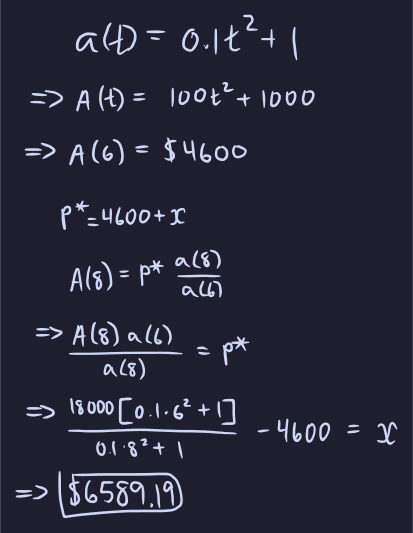
Sources
- Finan, A Basic Course in the Theory of Interest and Derivatives Markets