Notes › ENGR 2334: Electric Circuits I Lecture 3
Resistive Circuits
254 words 3 min Modified
Table of Contents
Kirchoff’s Laws
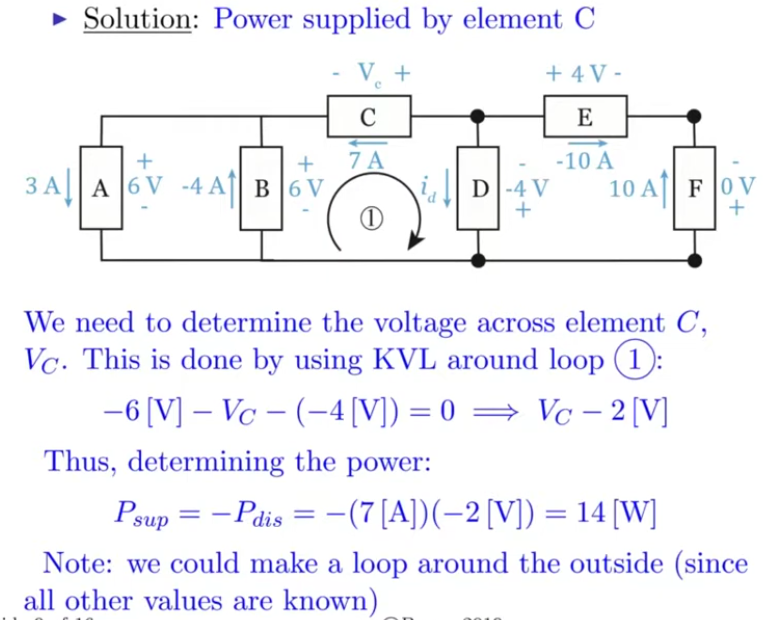
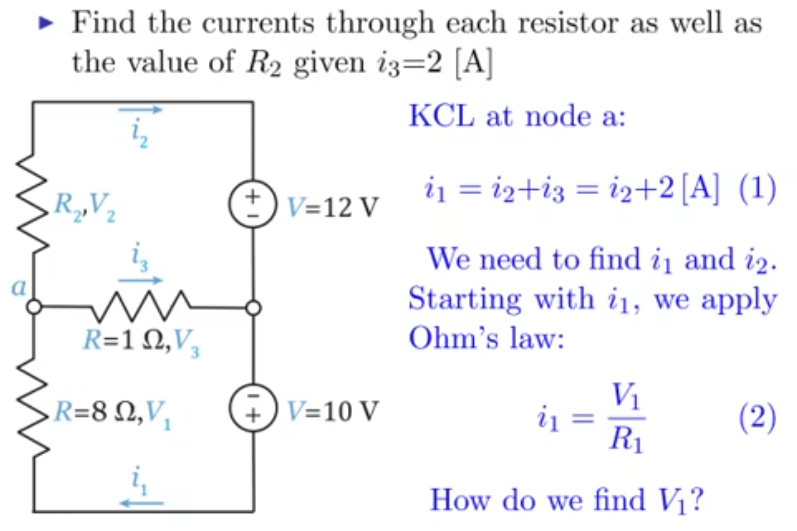
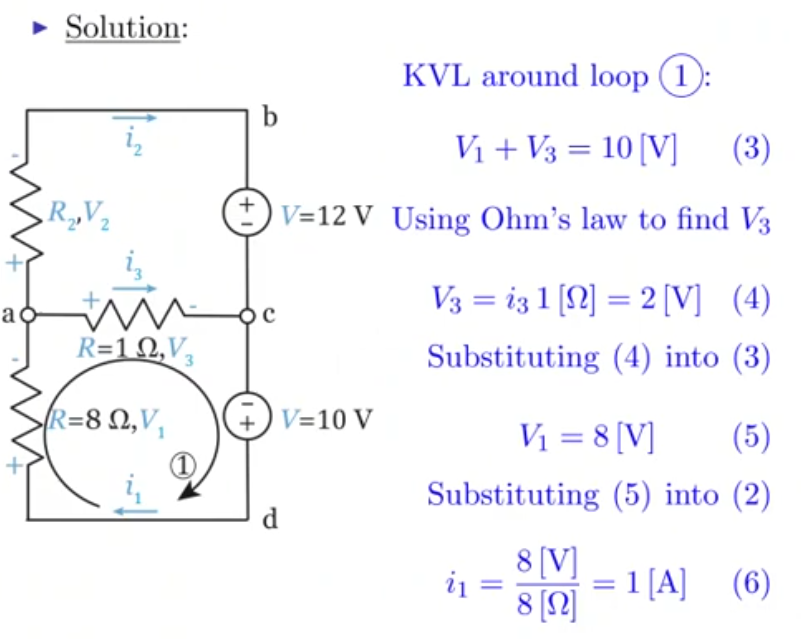
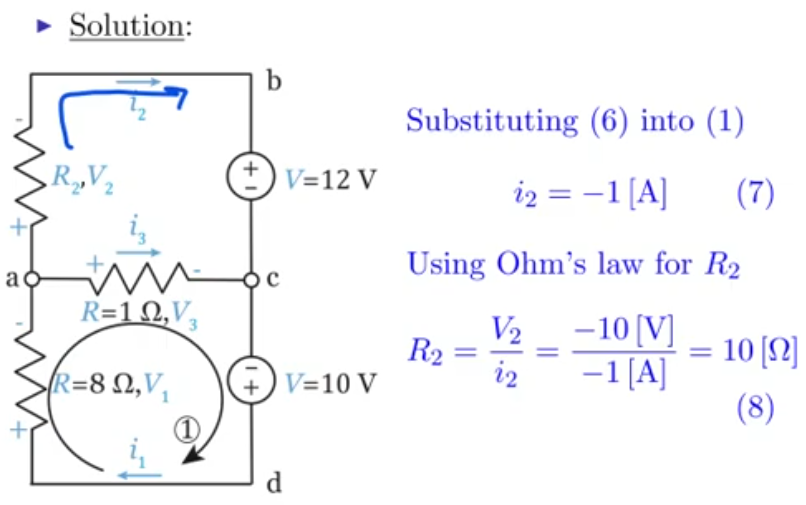
Voltage Law
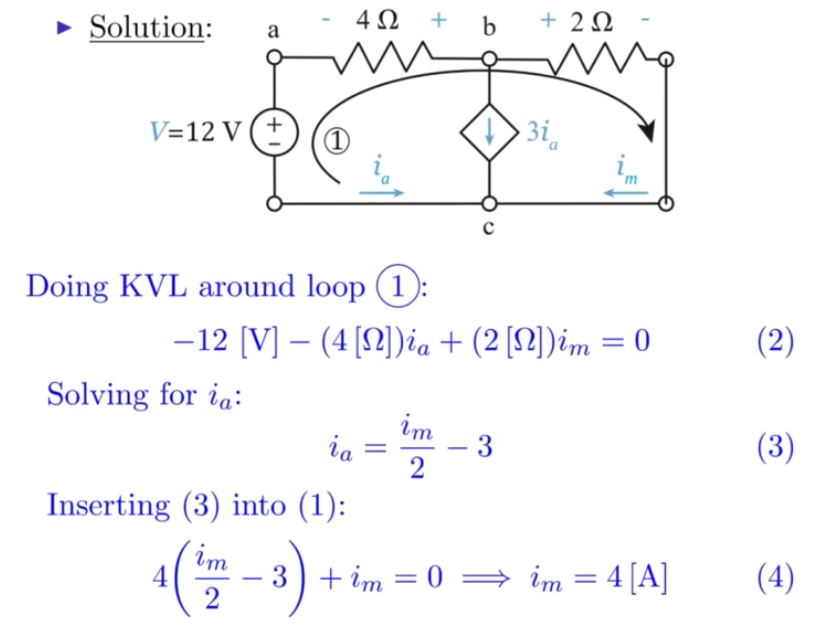
$$\sum V_{\text{drop}}=\sum V_{\text{rise}}$$- The sum of voltages sources and drops for any loop is zero
- Find the voltage/current for elements in series
- Based on the Law of Conservation of Energy
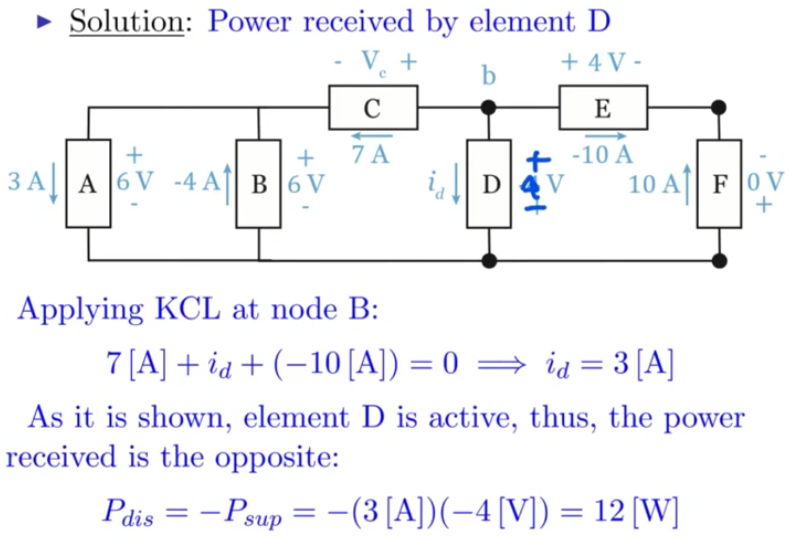
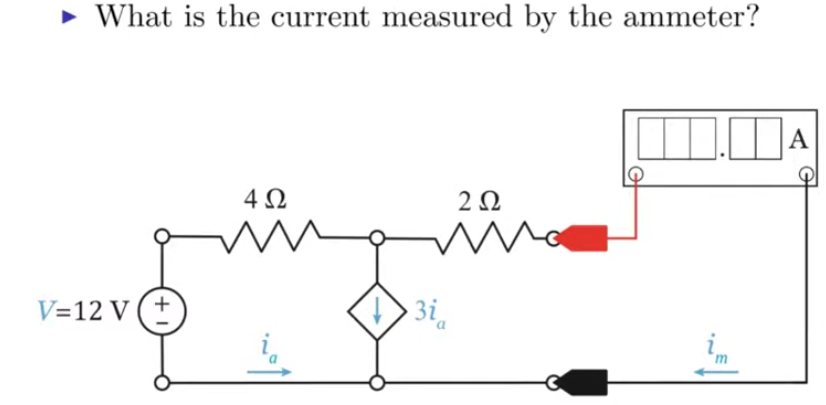
Current Law
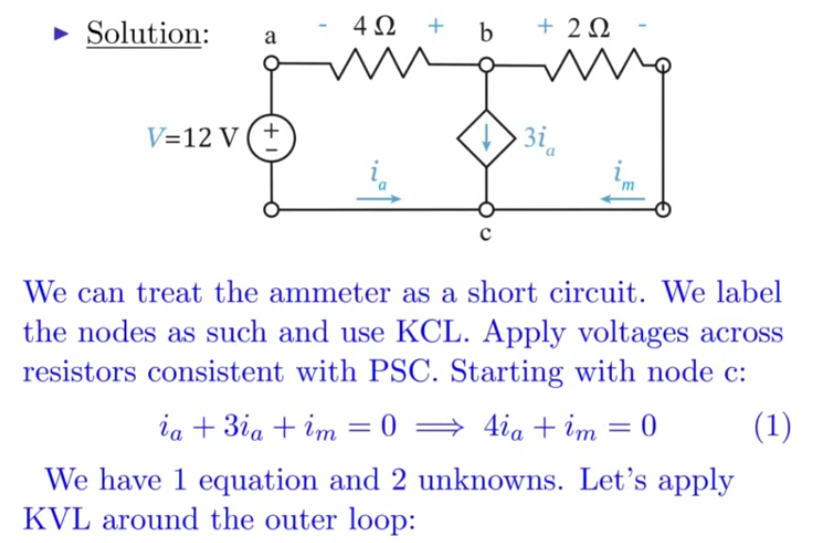
$$\sum i_{\text{in}} = \sum i_{\text{out}}$$- The sum of currents entering a node is zero
- Find the current for a loop
- Based on the Law of Conservation of Charge
Examples
Voltage and Current Division
Voltage Division
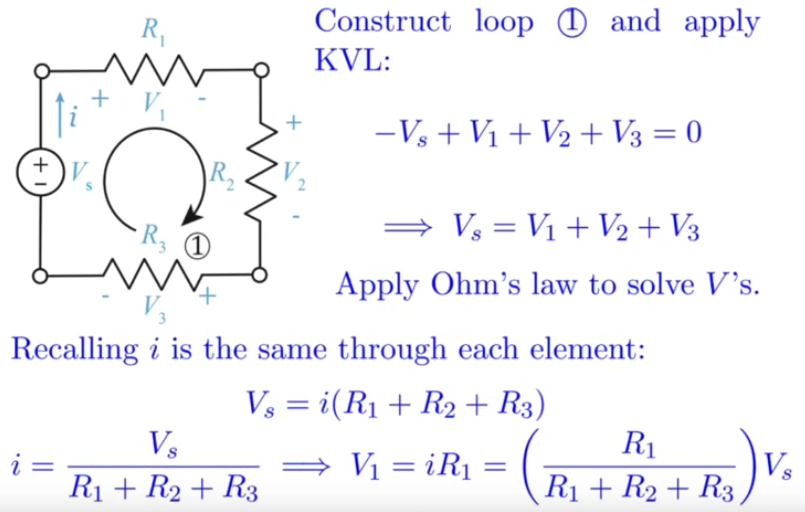
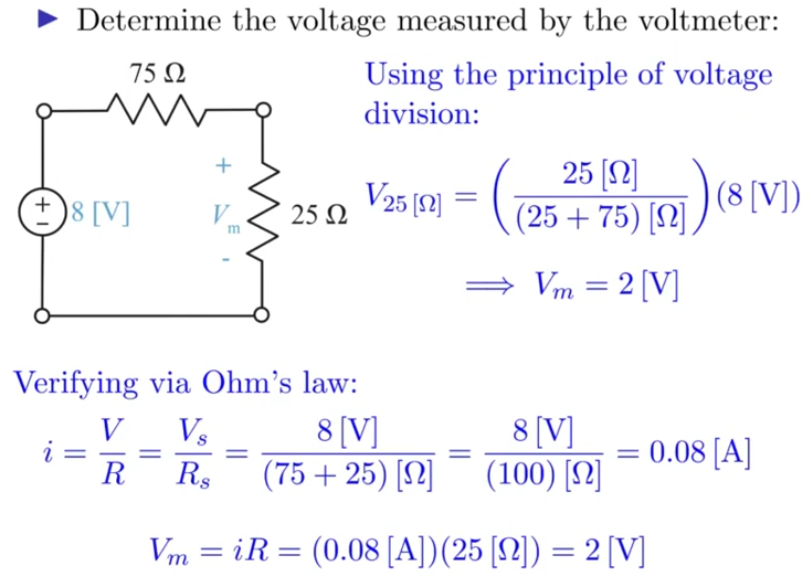
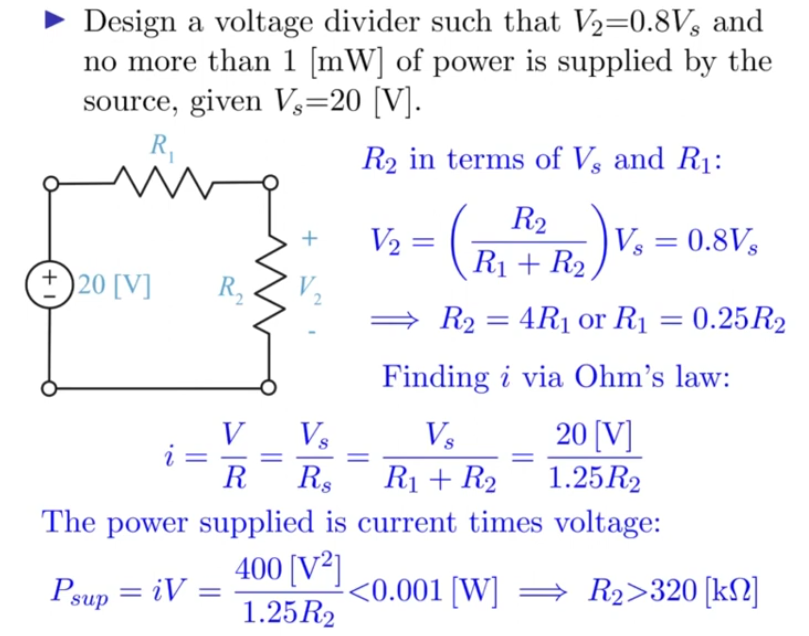
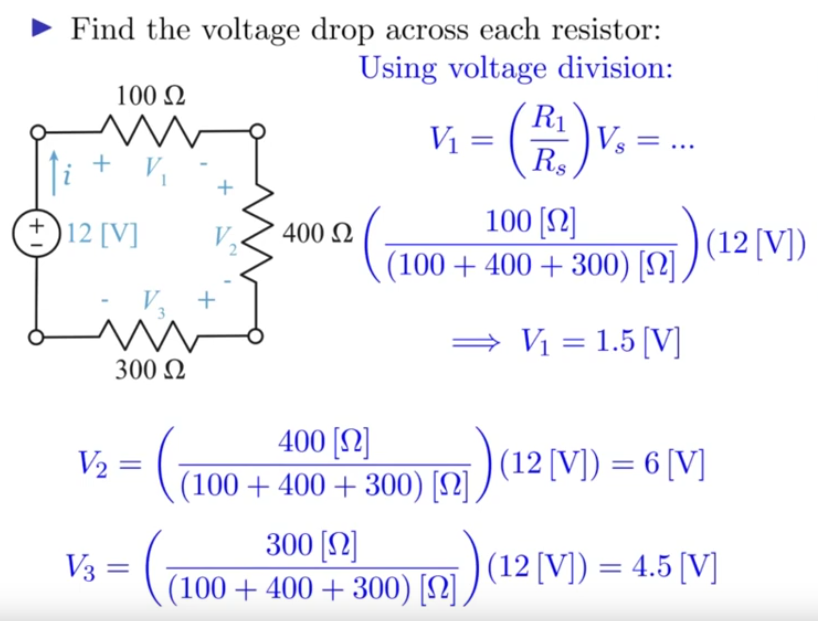
- Voltage division is applicable for elements in series
Examples
Current Division
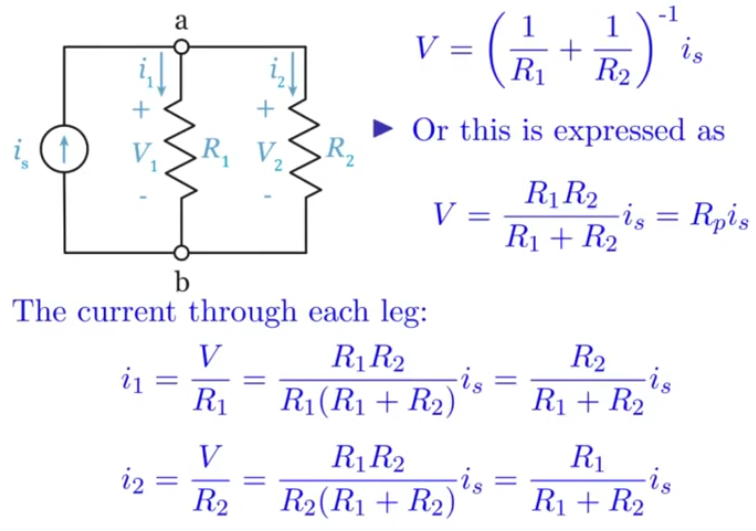
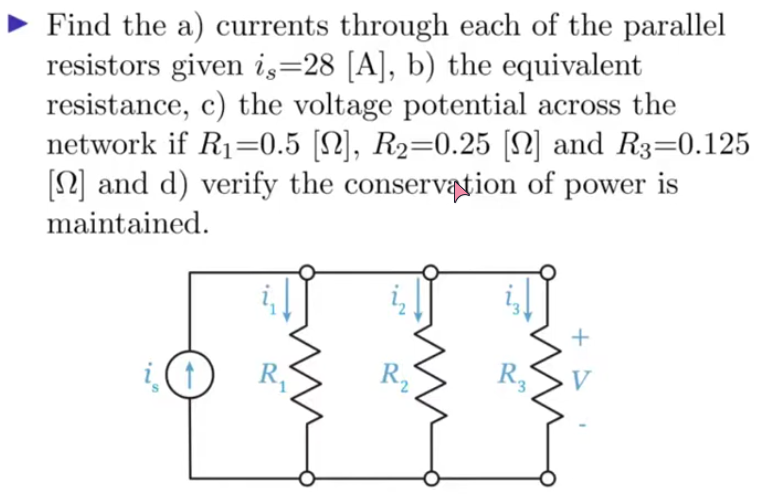
- Current division is applicable for elements in parallel
Examples
Conductance
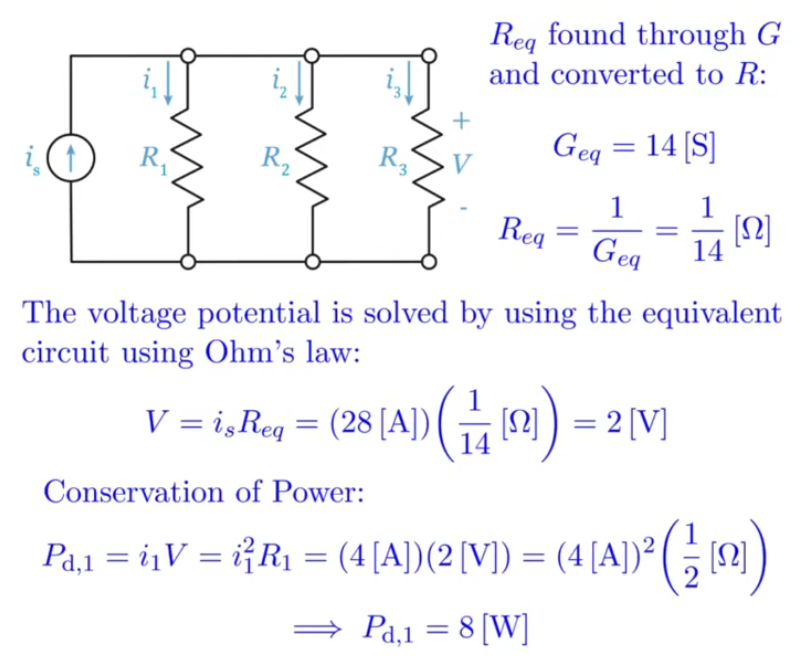
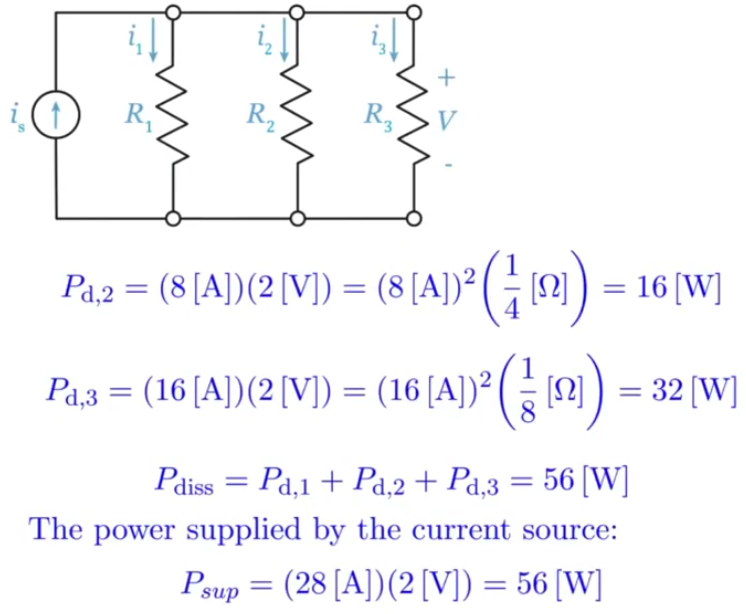
- Ohm’s Law for conductance
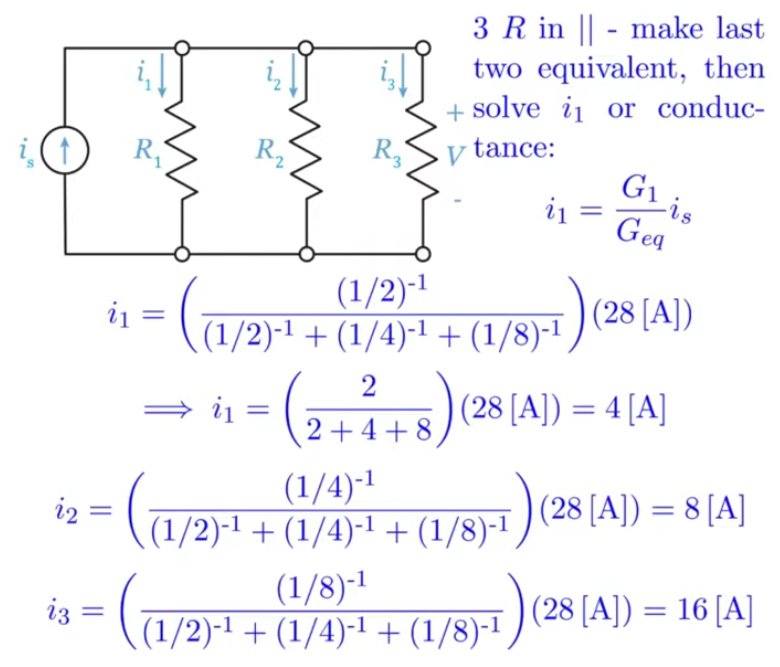
- Current division across branches can be done with conductance values
- Use the formula for voltage division, but replace the resistances with conductances and voltage with current
- Same applies for voltage division for conductors in series
Equivalent Ideal Sources
Voltage Sources
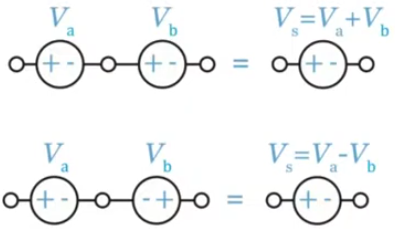
- Voltage sources may only be configured in series with one another
- Voltage sources in series have the same current
- Voltage sources in series can be combined to form one equivalent voltage source
Current Sources
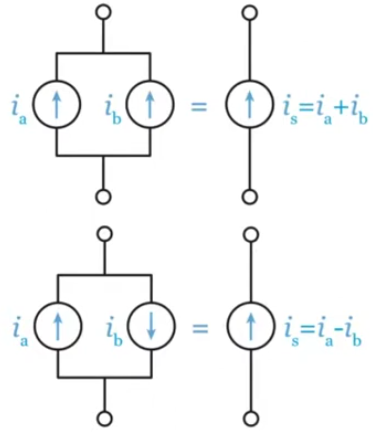
- Current sources may only be configured in parallel with one another
- Current sources in parallel have the same voltage
- Current sources in parallel can be combined to form one equivalent current source
References
- What is voltage law
- Kirchoff’s Voltage law
- Kirchoff’s Current law
- Current source and dependent current sources
- Voltage source as independent and dependent sources
- Course slides, chapter 3: Resistive Circuits
Sources
- Course slides, chapter 3: Resistive Circuits