Notes › Fundamentals of Electric Circuits (Sadiku) Lecture 7
First-Order Circuits
820 words 8 min Modified
Table of Contents
First-Order Circuit
A circuit containing one energy storage device (resistor/capacitor) with a resistor. Characterized by a first-order differential equation.
- Two ways to excite 1st order circuit:
- Source-free circuit: assume the energy storage element holds all the energy via initial condition
- Although there are no independent sources, there may be dependent sources
- Independent sources
- Source-free circuit: assume the energy storage element holds all the energy via initial condition
Source-Free RC
- Voltage response is an exponential decay of $V_o$
- This is called the natural response, since it is due to the energy storage unit itself
The behavior of voltage and current with no external excitation.
The time required for the response to decay to a factor of $\frac{1}{e}$ or 36.8% of its initial value.
$$\tau = RC$$-
Circuits with a small $\tau$ reach steady state (complete energy dissipation) quickly
-
Current response by Ohm’s Law:
- Power dissipated by $R$:
- Energy absorbed by $R$:
- $R$ is often $R_{\text{th}}$ at the terminals of the capacitor
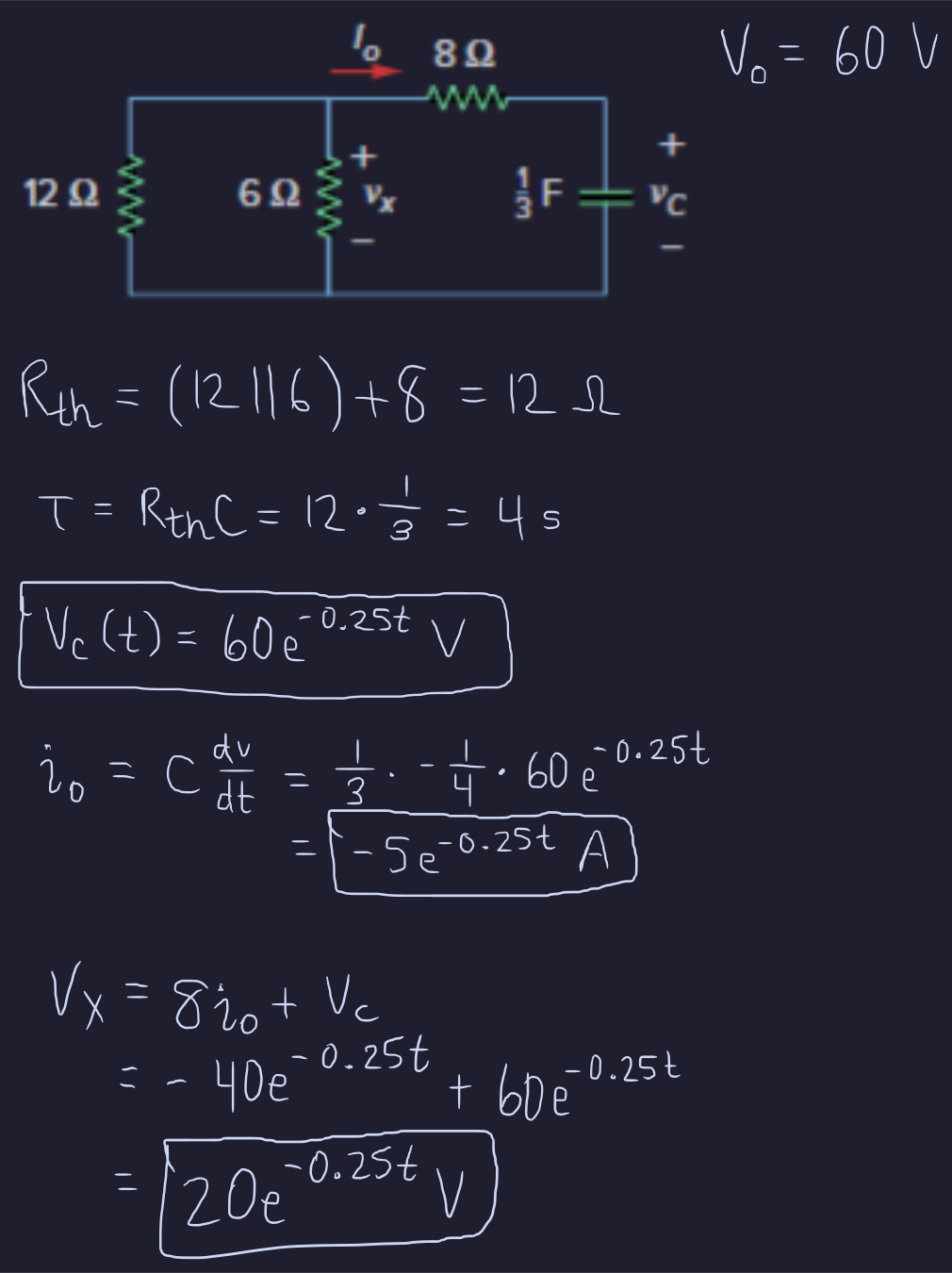
(Practice Problem 7.1
[Alexander & Sadiku, Fundamentals of Electric Circuits, 7th ed., p. 282])
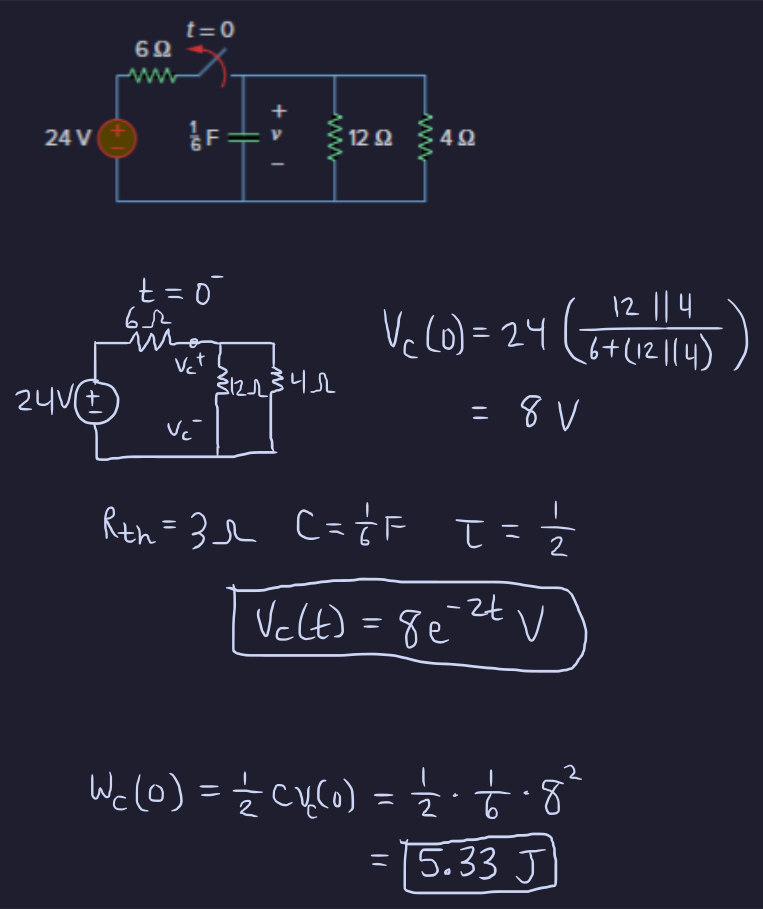
(Practice Problem 7.2
[Alexander & Sadiku, Fundamentals of Electric Circuits, 7th ed., p. 283])
Source-Free RL
- Natural response is an exponential decay of $I_0$
- Time constant
- Voltage response by Ohm’s Law:
- Power dissipated by $R$:
- Energy absorbed by $R$:
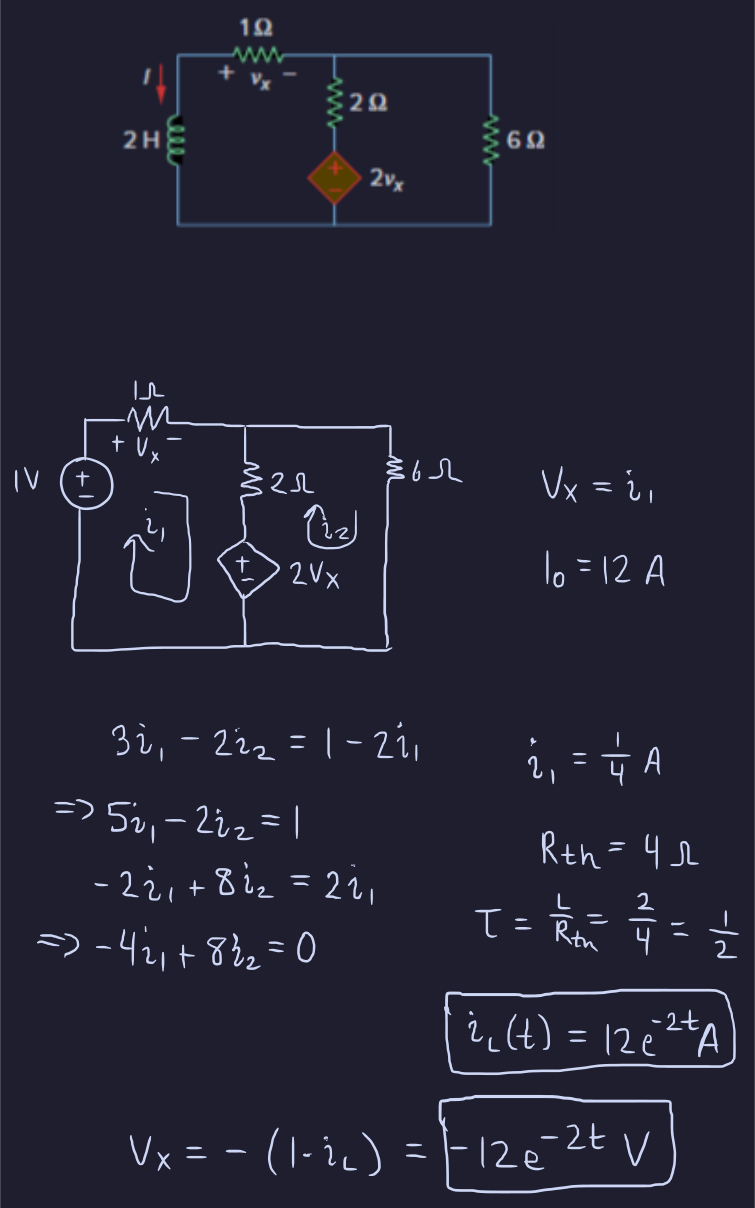
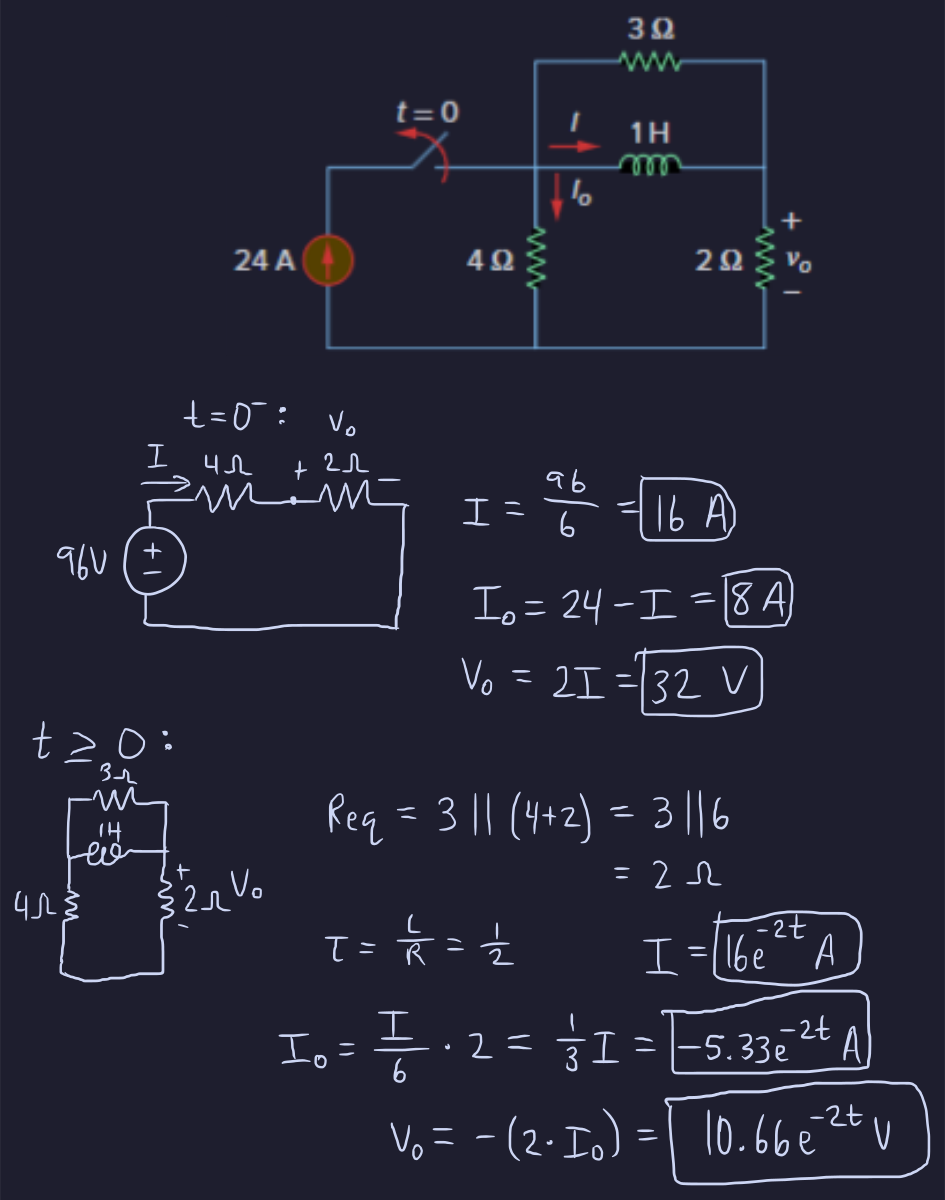
(Practice Problem 7.3
[Alexander & Sadiku, Fundamentals of Electric Circuits, 7th ed., p. 287])
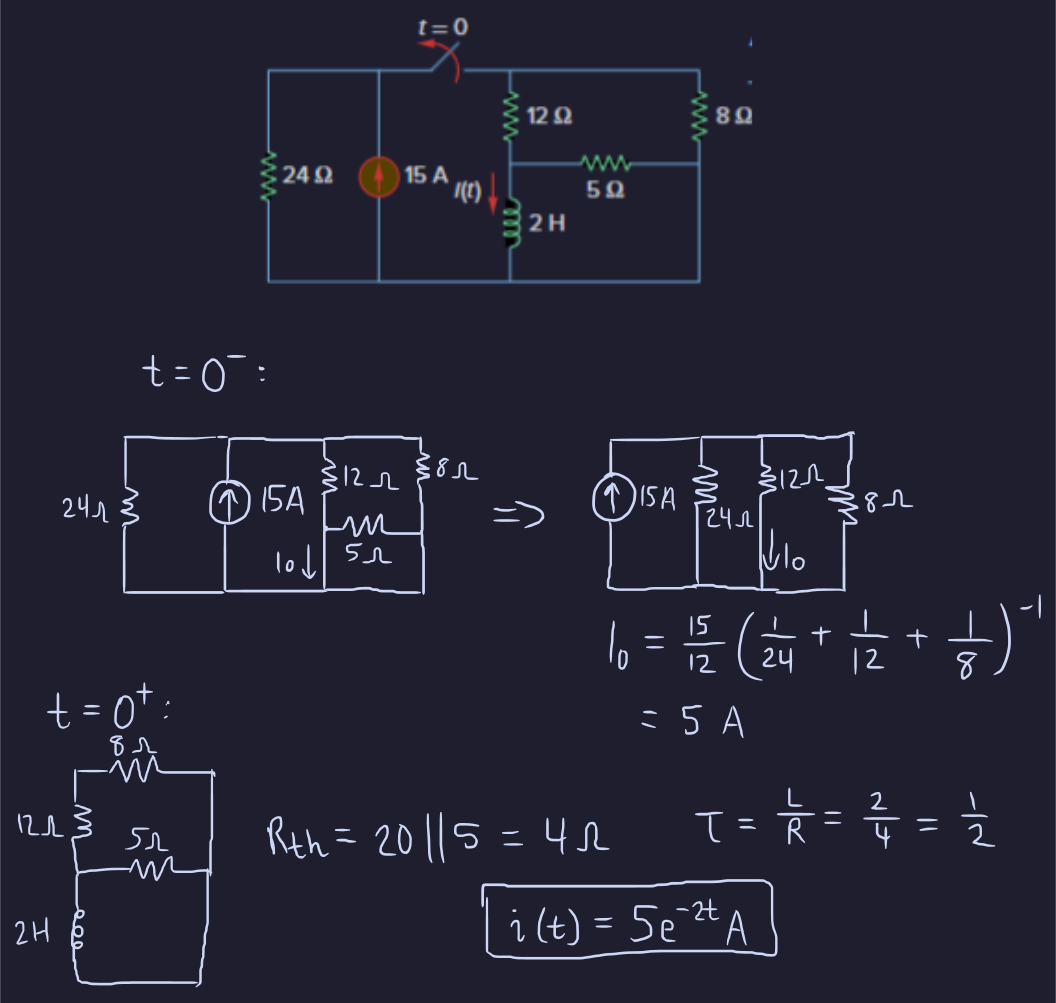
(Practice Problem 7.4
[Alexander & Sadiku, Fundamentals of Electric Circuits, 7th ed., p. 288])
(Practice Problem 7.5
[Alexander & Sadiku, Fundamentals of Electric Circuits, 7th ed., p. 289])
Singularity Functions
Functions that are discontinuous or have discontinuous derivatives.
Unit Step
$$u(t) = \begin{cases} 0,& t < 0 \\ 1,& t>0 \end{cases}$$- Represents an abrupt change in voltage/current
Unit Impulse
$$\delta(t) = \frac{\mathrm{d}}{\mathrm{d}t}u(t) = \begin{cases} 0,& t<0 \\ \text{Undefined},& t=0 \\ 0,& t>0 \end{cases}$$- Zero everywhere except at $t=0$, where it spikes to a value, which is equal to its area:
- Any function integrated with the impulse function is “sampled” at the point of impulse
Unit Ramp
$$r(t) = \int_{-\infty}^{t} u(\tau) \, \mathrm{d}\tau = \begin{cases} 0,& t \le 0 \\ t,& t \ge 0 \end{cases}$$Complete Response
- The complete response is the sum of the response from the stored energy (natural response) and the response from the independent source (forced response)
where $v_n = V_0 e^{-t\frac{t}{\tau}}$ and $v_f = V_s(1 - e^{-\frac{t}{\tau}})$
- Alternatively: the sum of the transient response and the steady-state response
- $v_t$ decays to zero as $t \rightarrow \infty$
- $v_{ss}$ remains after $v_t$ has died
where $v_t = (V_0 - V_s)e^{-\frac{t}{\tau}}$ and $v_{ss} = V_s$
- Final equation (valid from both perspectives):
where $v(0)$ is the voltage at $t = 0^+$ and $v(\infty)$ is the steady-state value
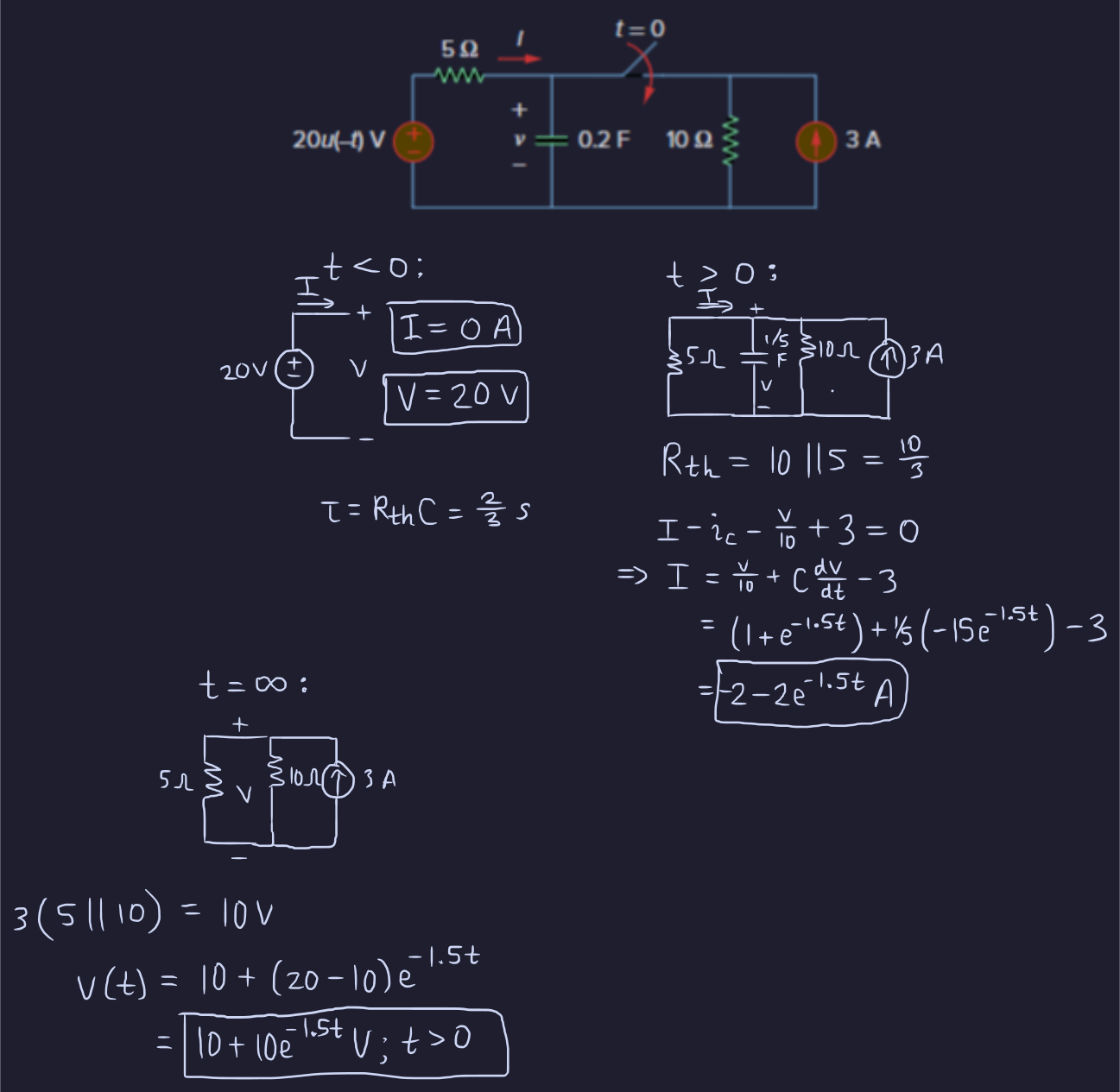
(Example 7.10
[Alexander & Sadiku, Fundamentals of Electric Circuits, 7th ed., p. 301])
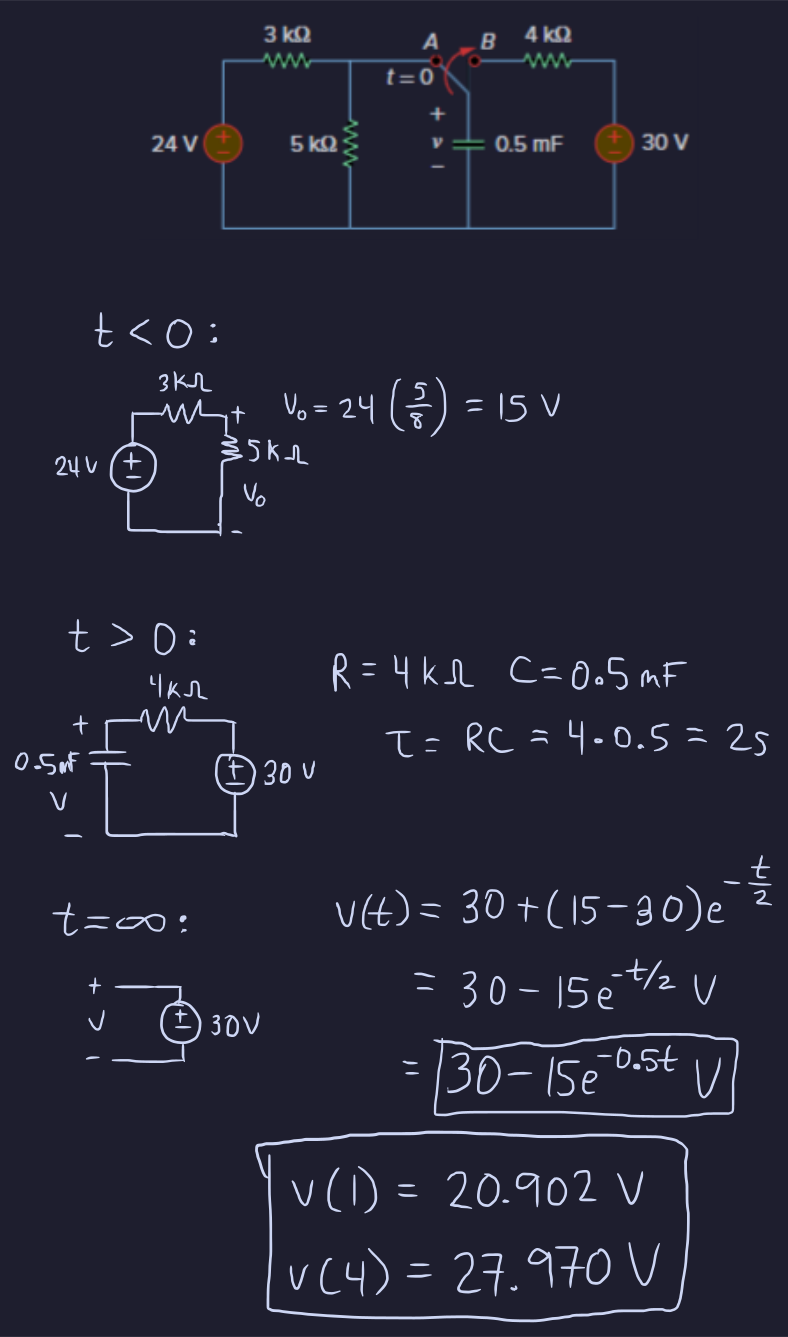
(Practice Problem 7.10
[Alexander & Sadiku, Fundamentals of Electric Circuits, 7th ed., p. 302])
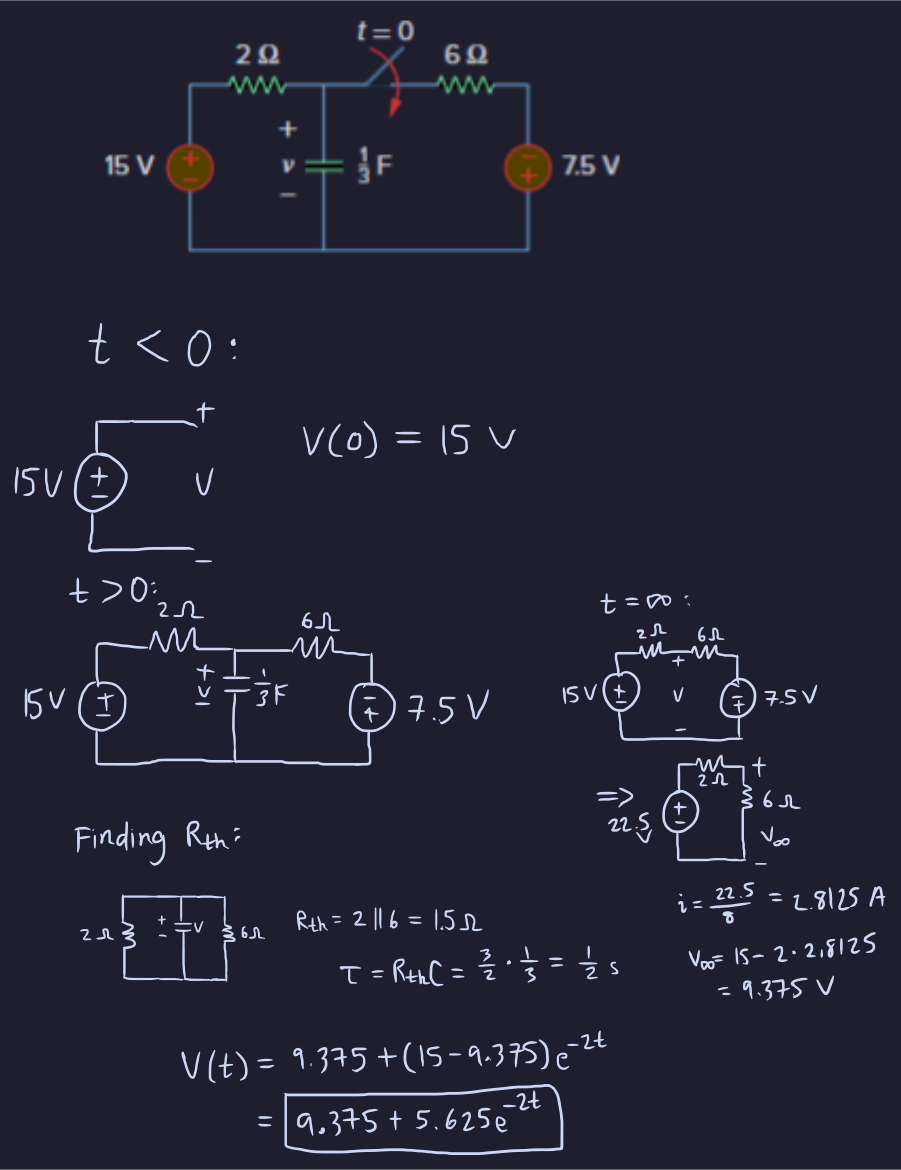
Example 7.11
[Alexander & Sadiku, Fundamentals of Electric Circuits, 7th ed., p. 302]
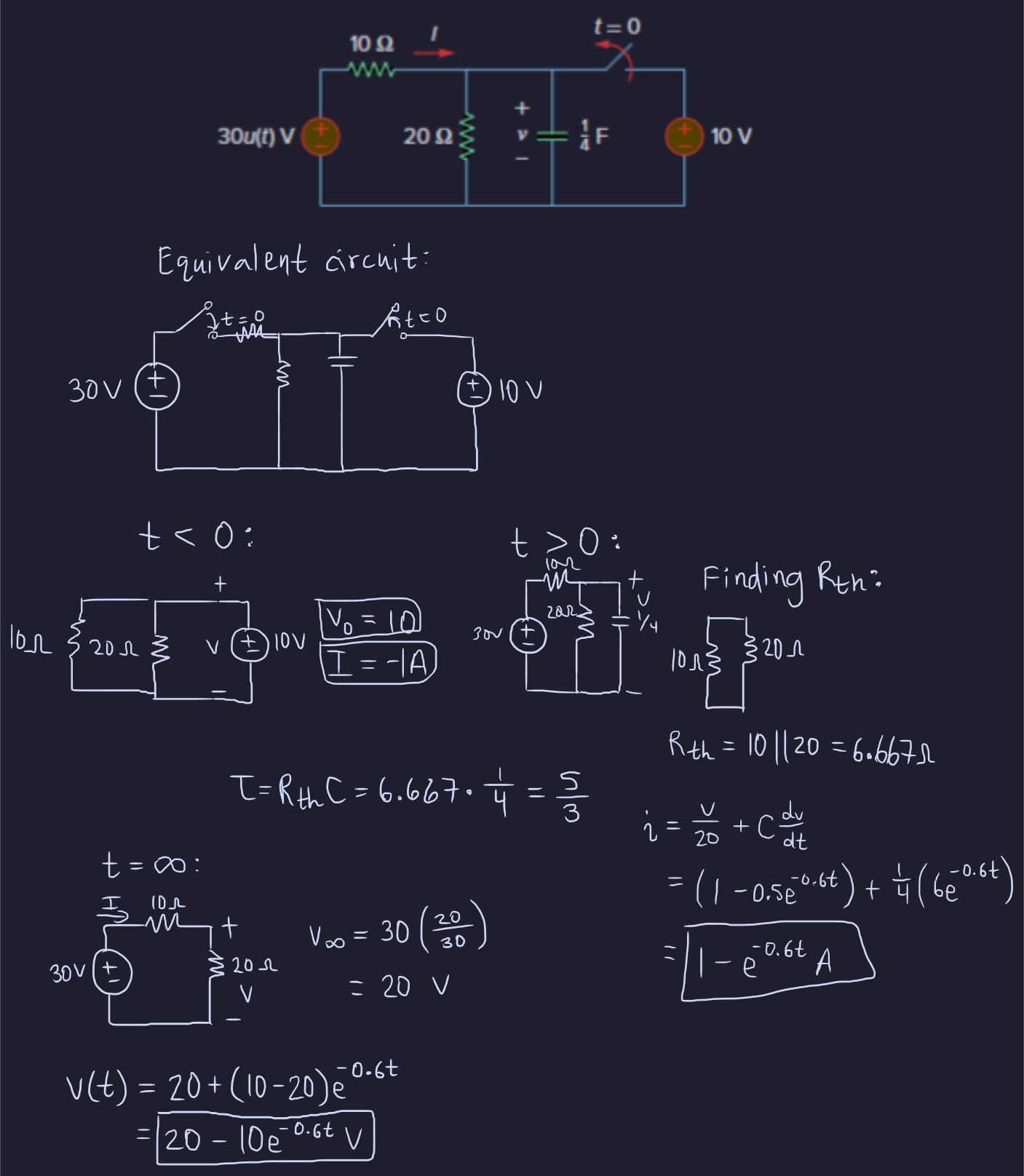
Practice Problem 7.11
[Alexander & Sadiku, Fundamentals of Electric Circuits, 7th ed., p. 303]
RC Step Response
- Complete response:
- If capacitor uncharged:
- Current through capacitor:
RL Step Response
- Complete response:
- If there is no $I_0$:
- Voltage across inductor:
- Complete response (easy form):
(Example 7.12
[Alexander & Sadiku, Fundamentals of Electric Circuits, 7th ed., p. 306])
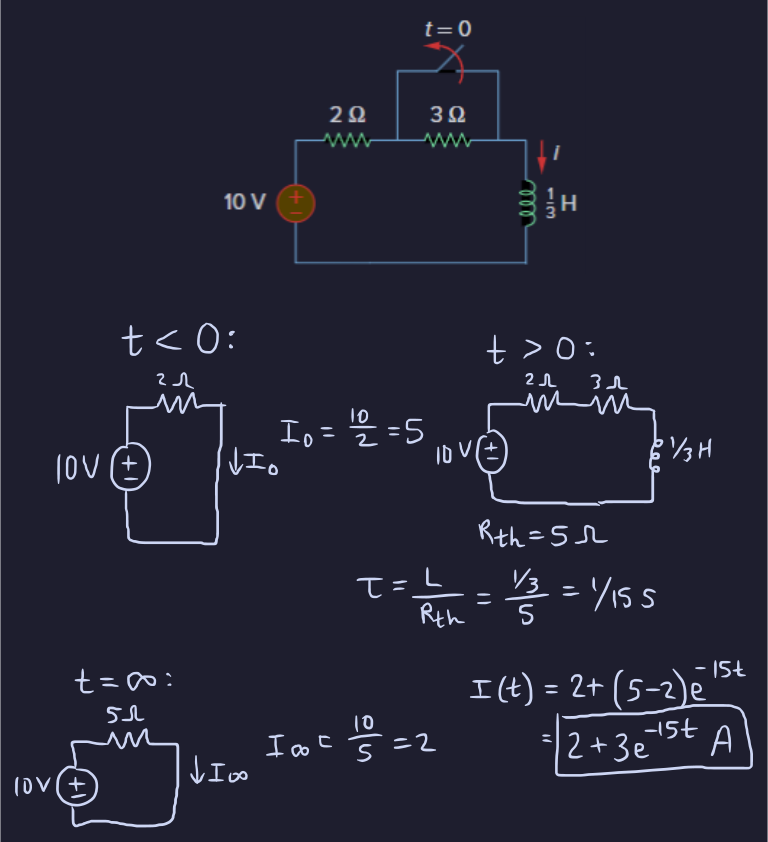
(Practice Problem 7.12
[Alexander & Sadiku, Fundamentals of Electric Circuits, 7th ed., p. 306])
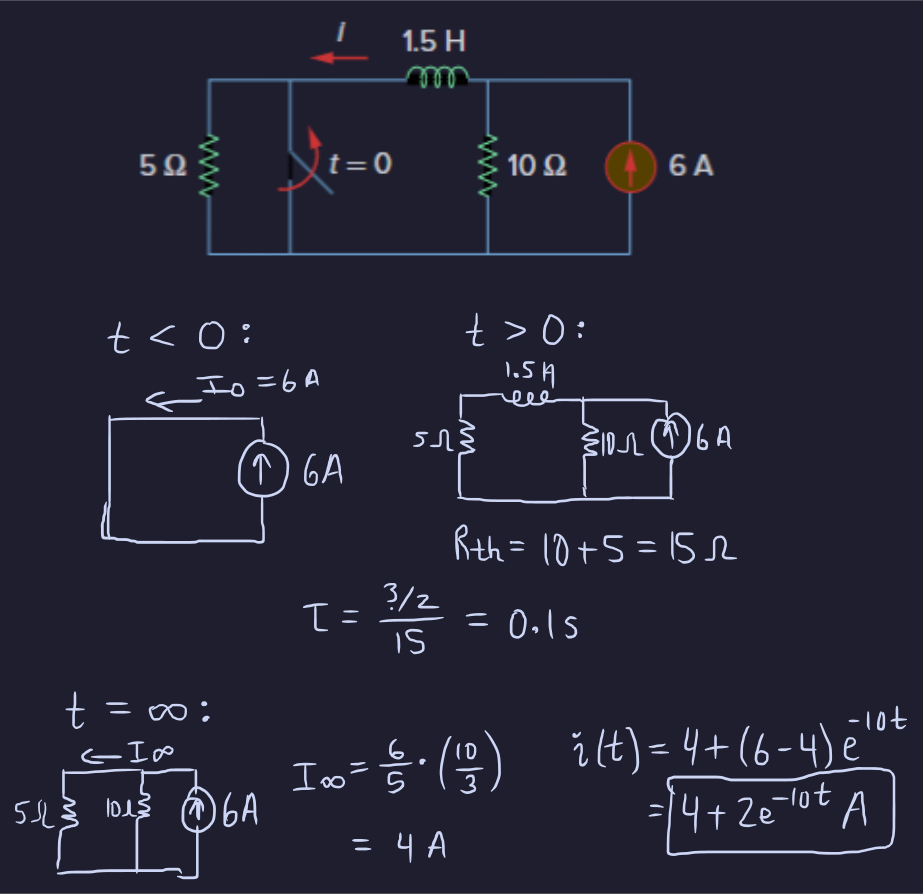
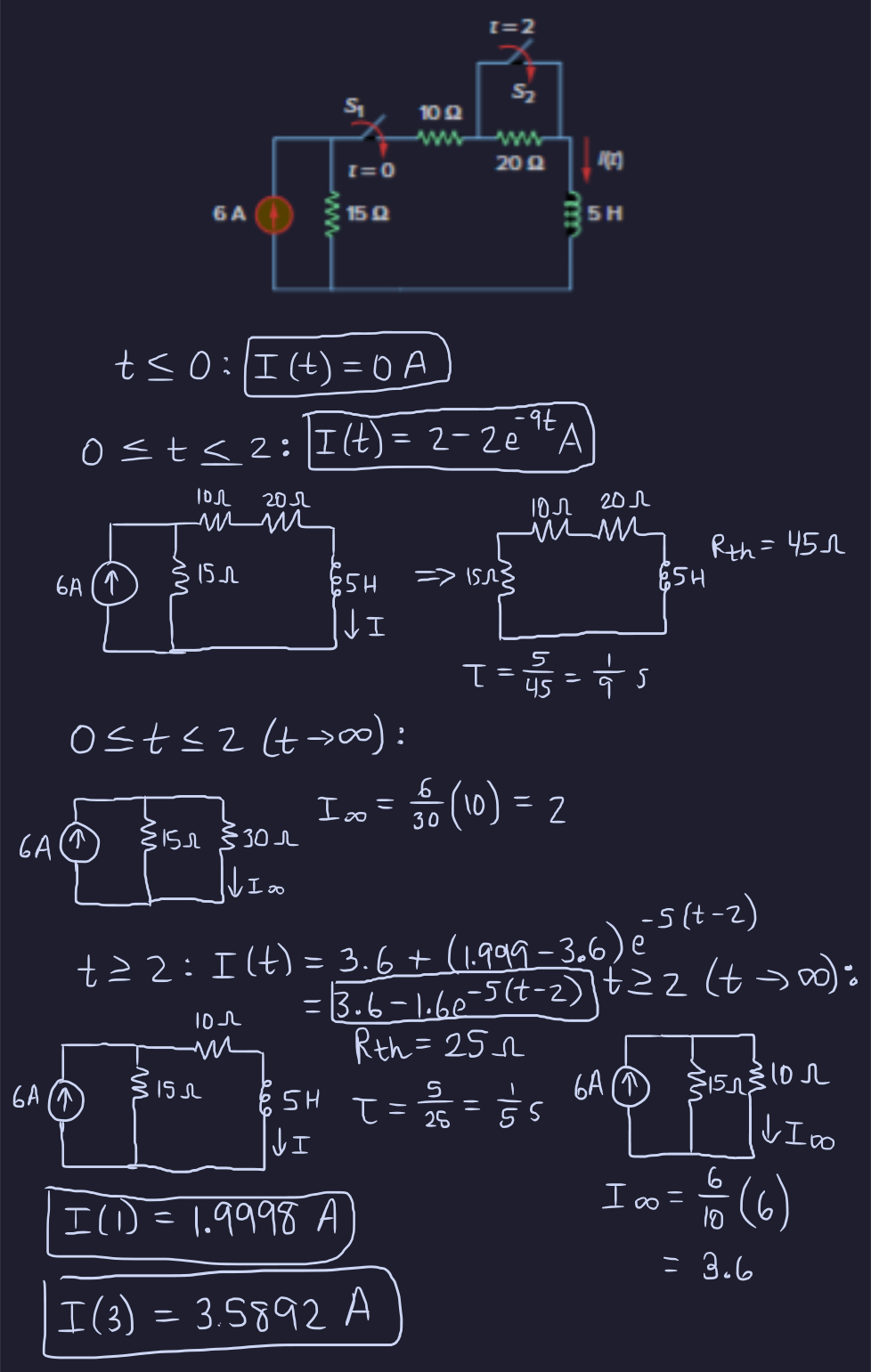
(Example 7.13
[Alexander & Sadiku, Fundamentals of Electric Circuits, 7th ed., p. 307])
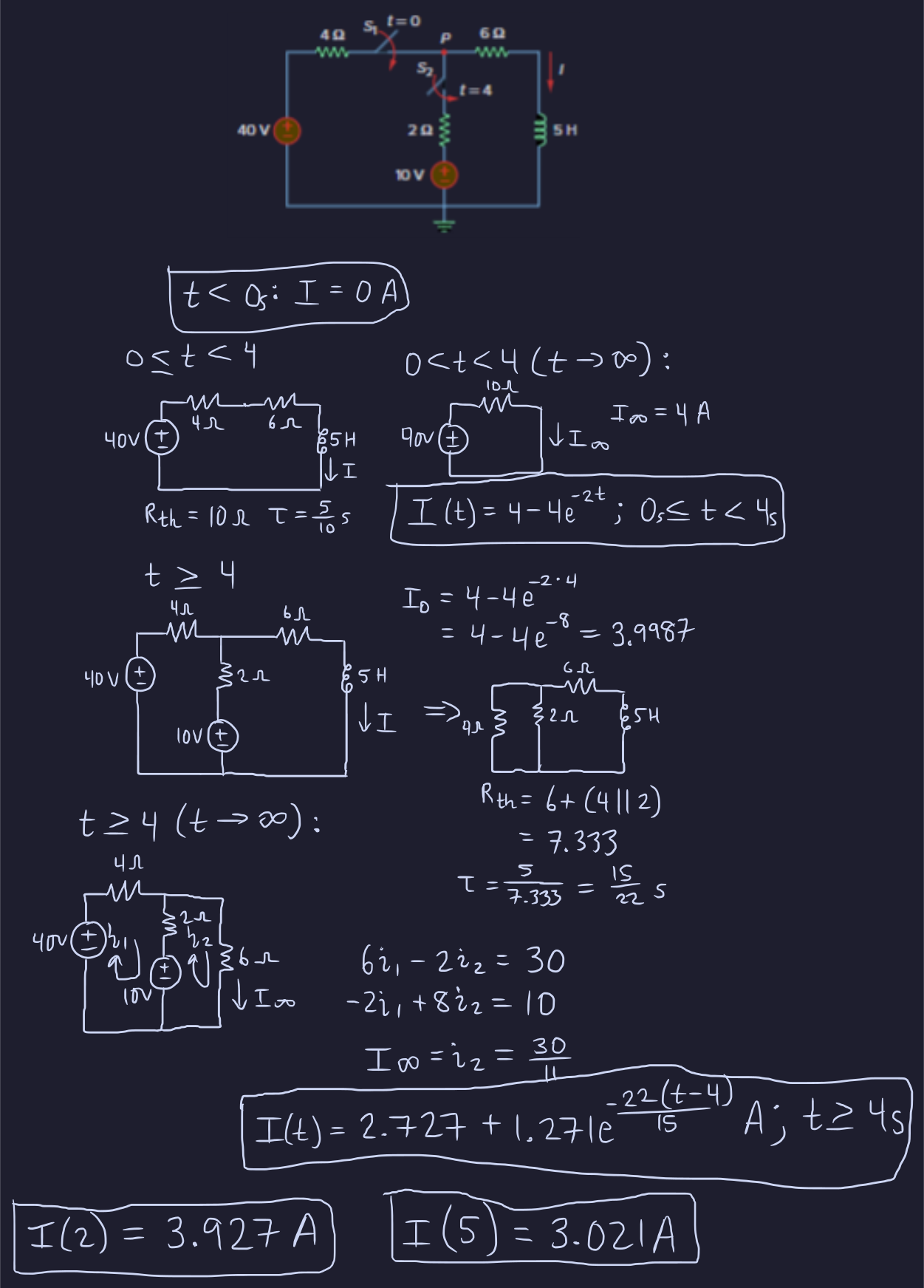
(Practice Problem 7.13
[Alexander & Sadiku, Fundamentals of Electric Circuits, 7th ed., p. 308])
First-Order Op Amps
- Analyze with nodal analysis or reduce to Thevenin equivalent circuit
(Example 7.14
[Alexander & Sadiku, Fundamentals of Electric Circuits, 7th ed., p. 309])
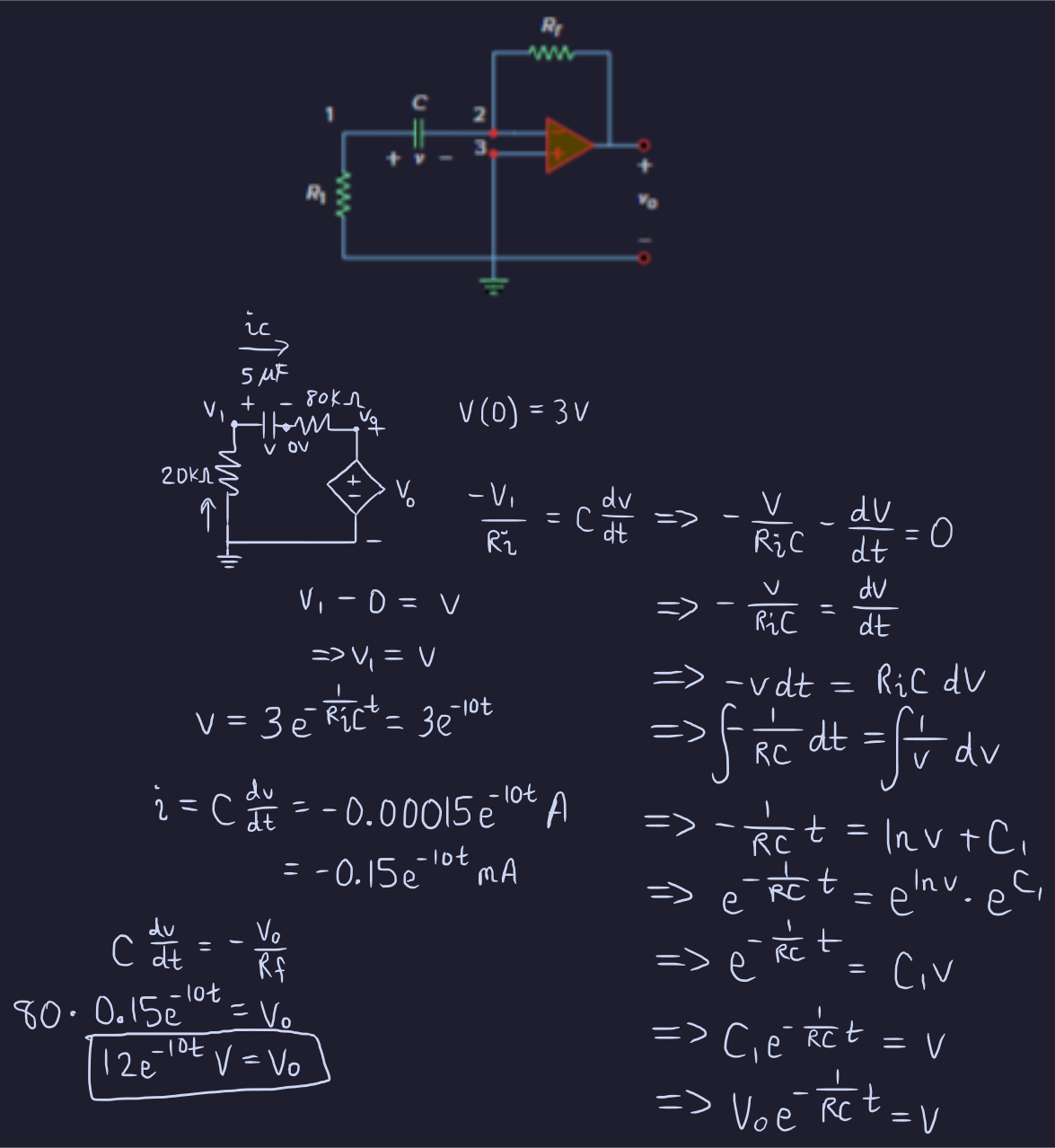
(Practice Problem 7.14
[Alexander & Sadiku, Fundamentals of Electric Circuits, 7th ed., p. 310])
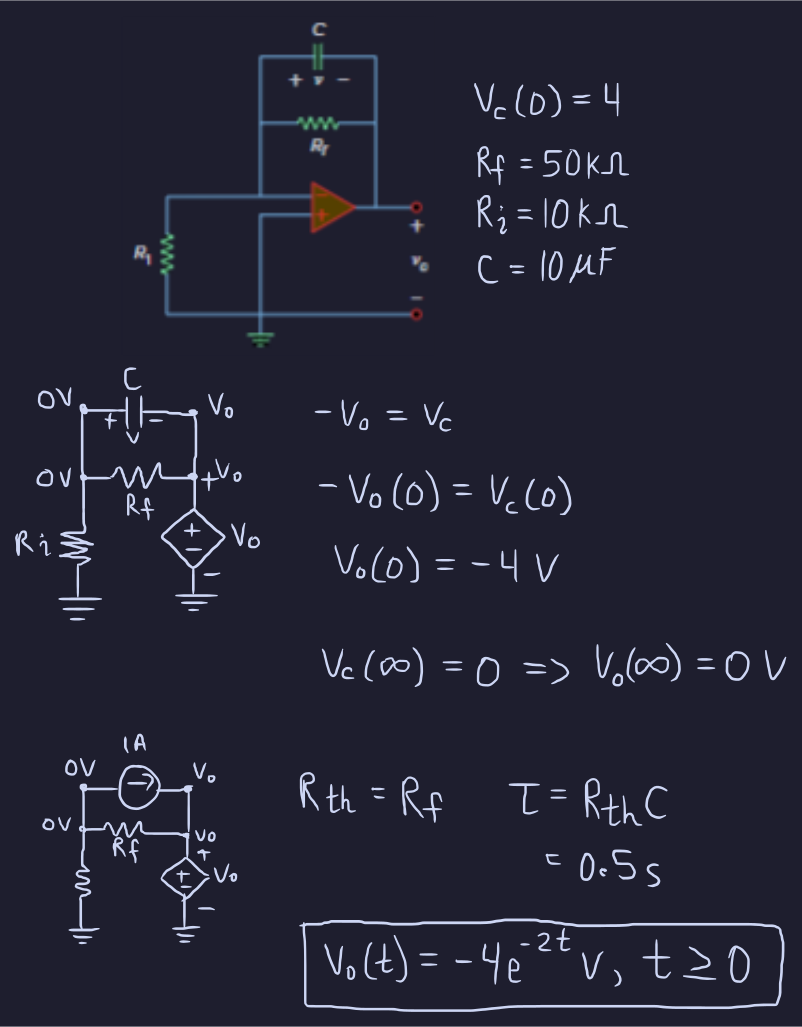
Example 7.15
[Alexander & Sadiku, Fundamentals of Electric Circuits, 7th ed., p. 310]
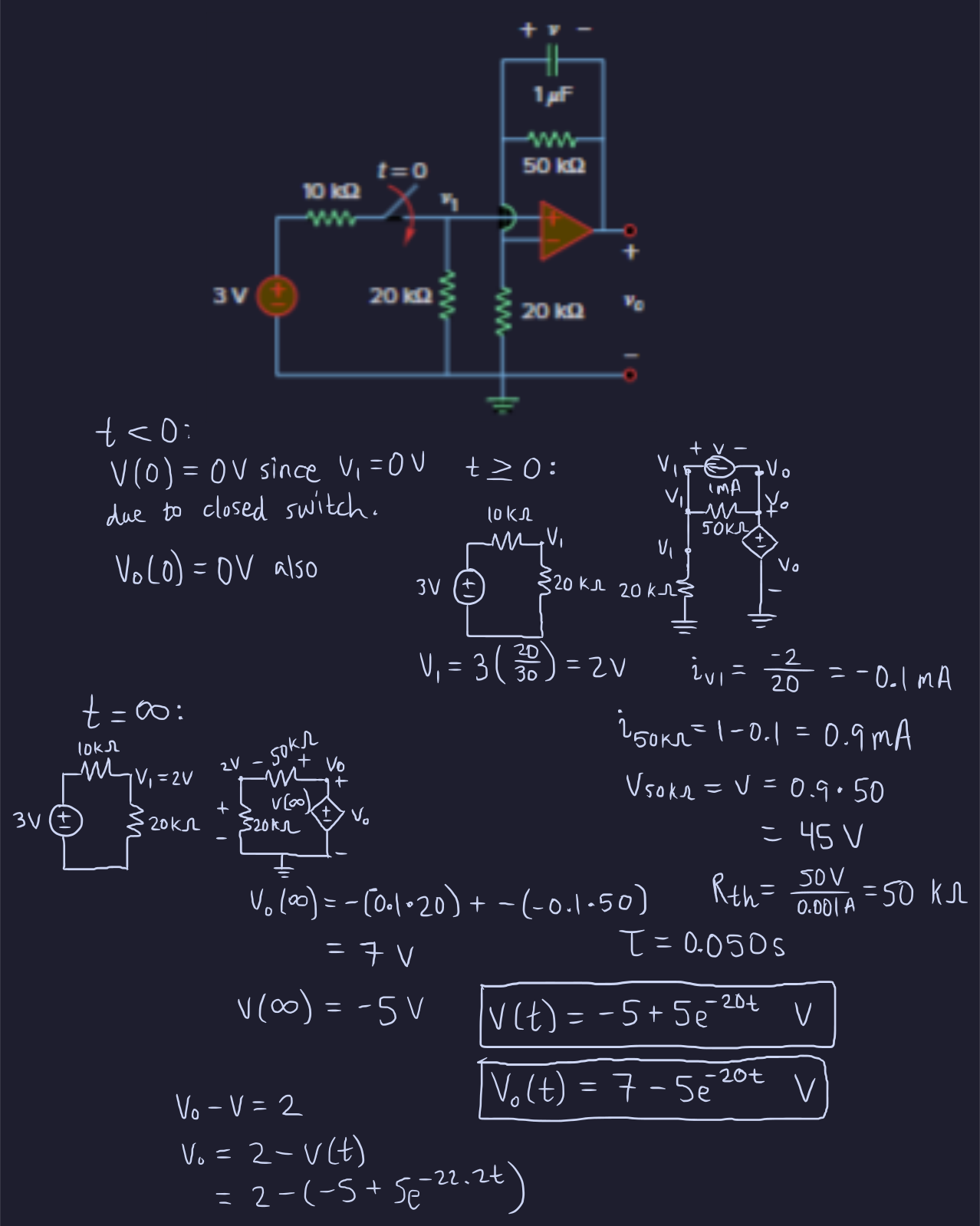
(Practice Problem 7.15
[Alexander & Sadiku, Fundamentals of Electric Circuits, 7th ed., p. 311])
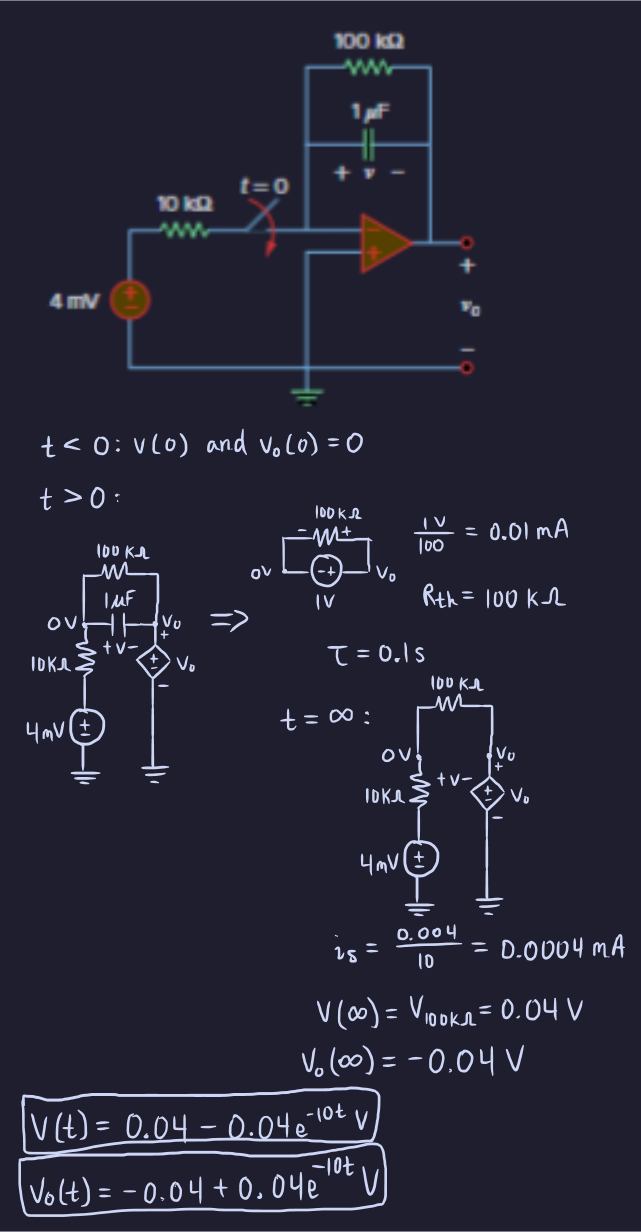
(Example 7.16
[Alexander & Sadiku, Fundamentals of Electric Circuits, 7th ed., p. 312])
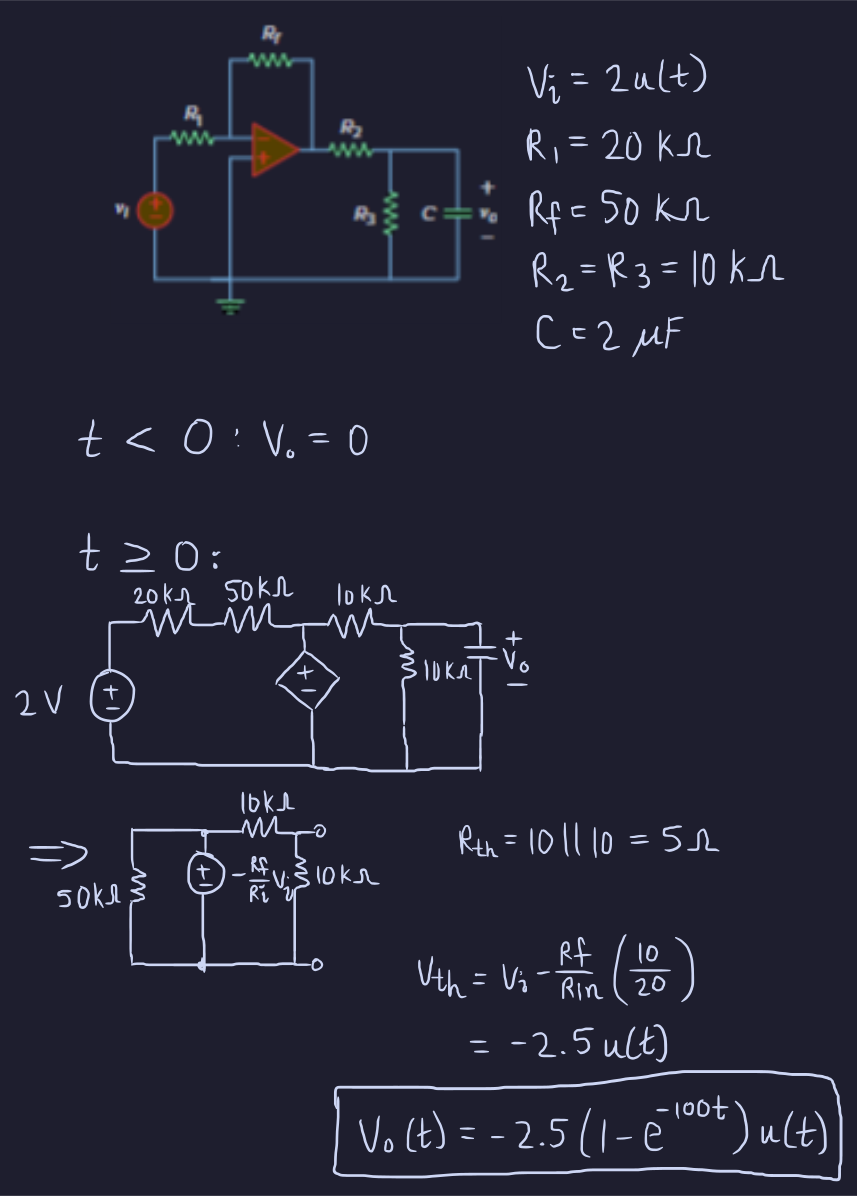
(Practice Problem 7.16
[Alexander & Sadiku, Fundamentals of Electric Circuits, 7th ed., p. 313])
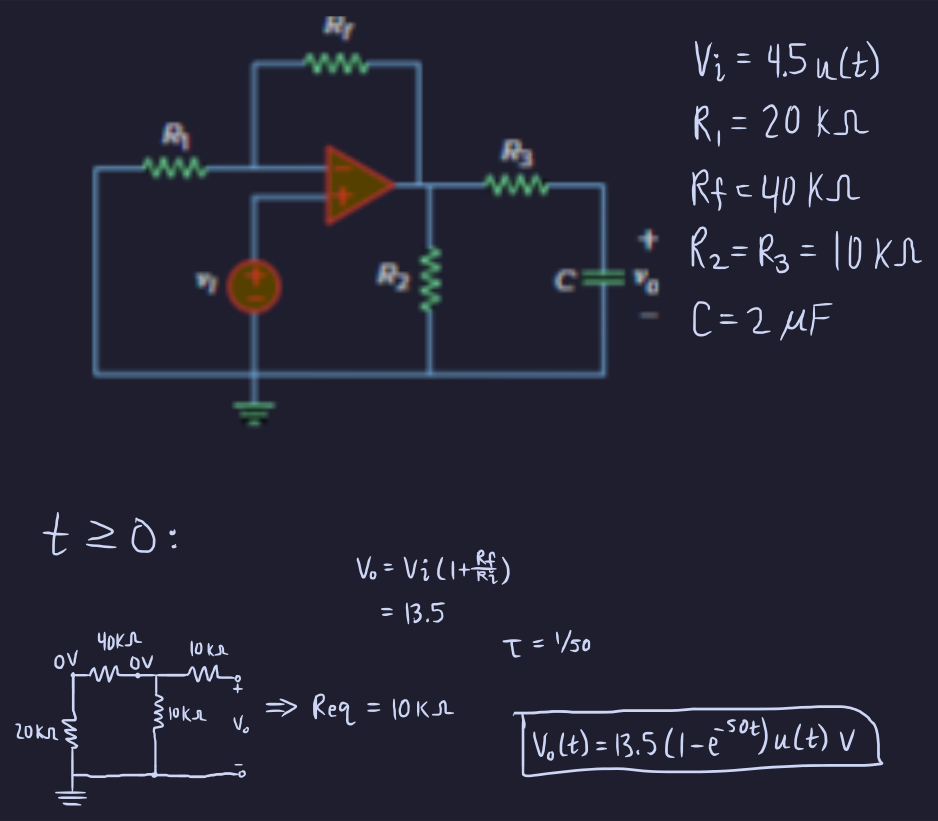
Sources
- Alexander & Sadiku, Fundamentals of Electric Circuits