Notes › Fundamentals of Electric Circuits (Sadiku) Lecture 8
Second-Order Circuits
655 words 7 min Modified
Table of Contents
Second-Order Circuit
Circuits with a response characterized by a second-order differential equation, containing two energy storage devices.
Finding Initial and Final Values
- Remember that capacitor voltage and inductor current are continuous
- Analyze the values right before and after the switching event
(Example 8.1
[Alexander & Sadiku, Fundamentals of Electric Circuits, 7th ed., p. 339])
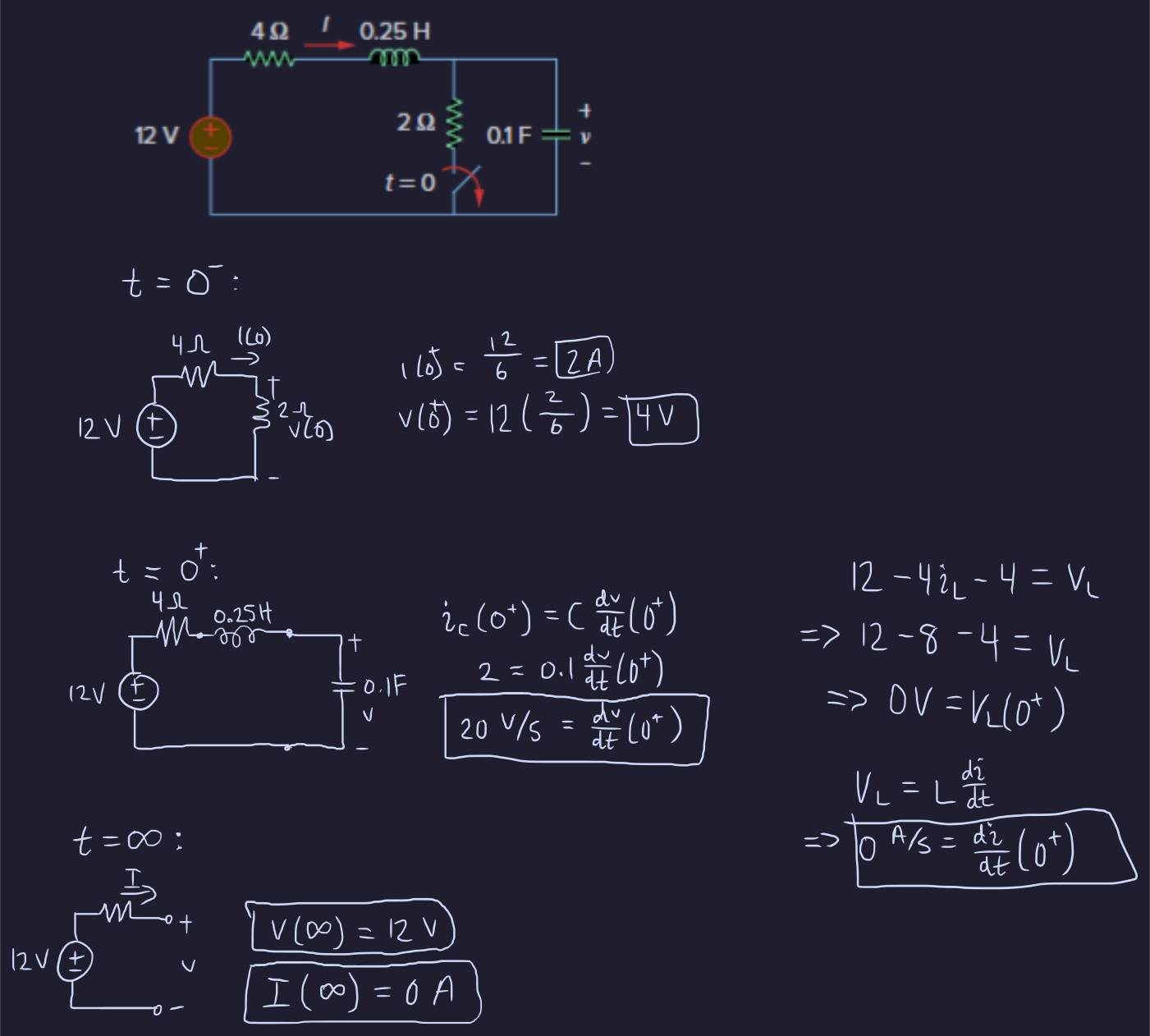
Practice Problem 8.1
[Alexander & Sadiku, Fundamentals of Electric Circuits, 7th ed., p. 340]
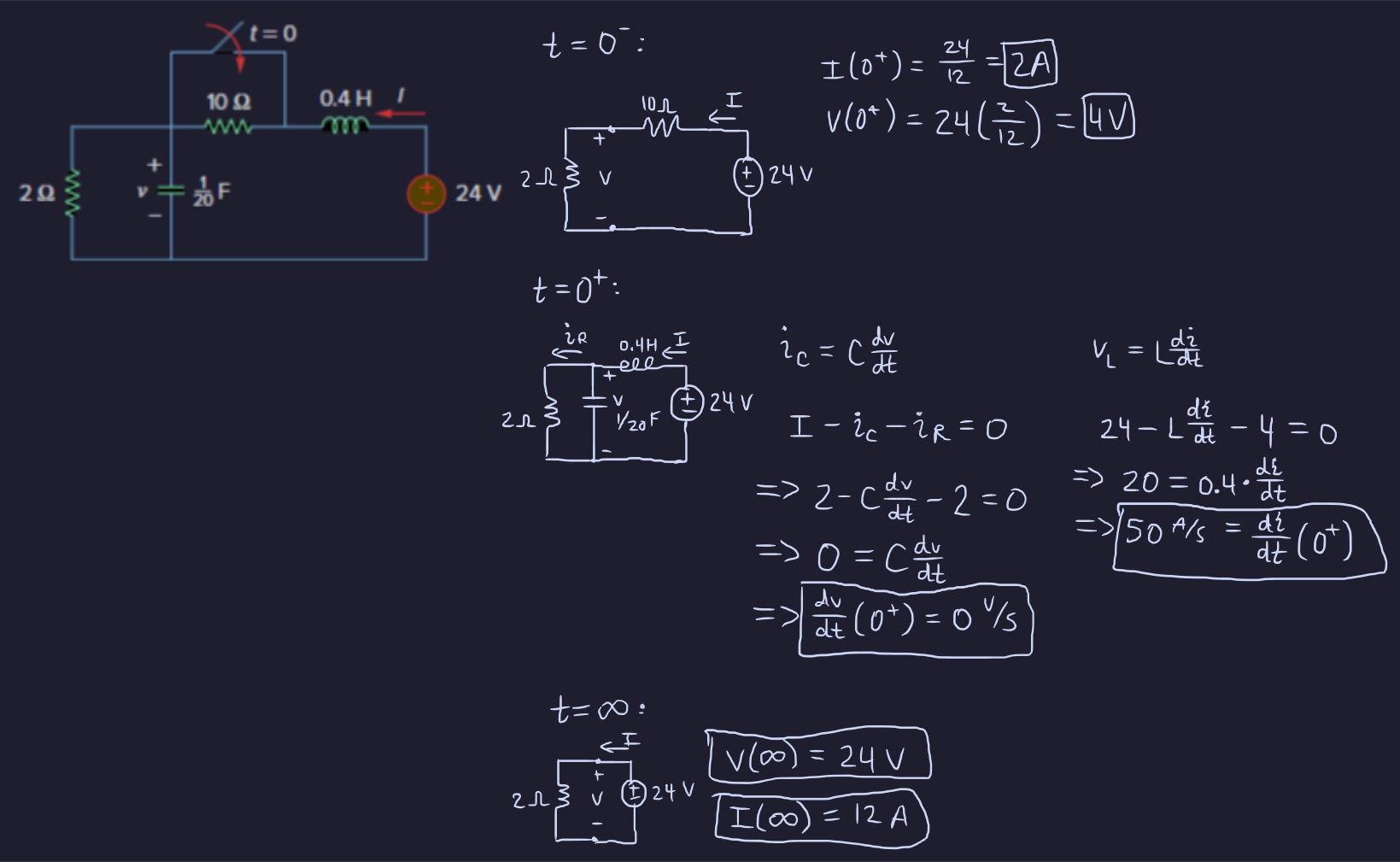
(Example 8.2
[Alexander & Sadiku, Fundamentals of Electric Circuits, 7th ed., p. 341])
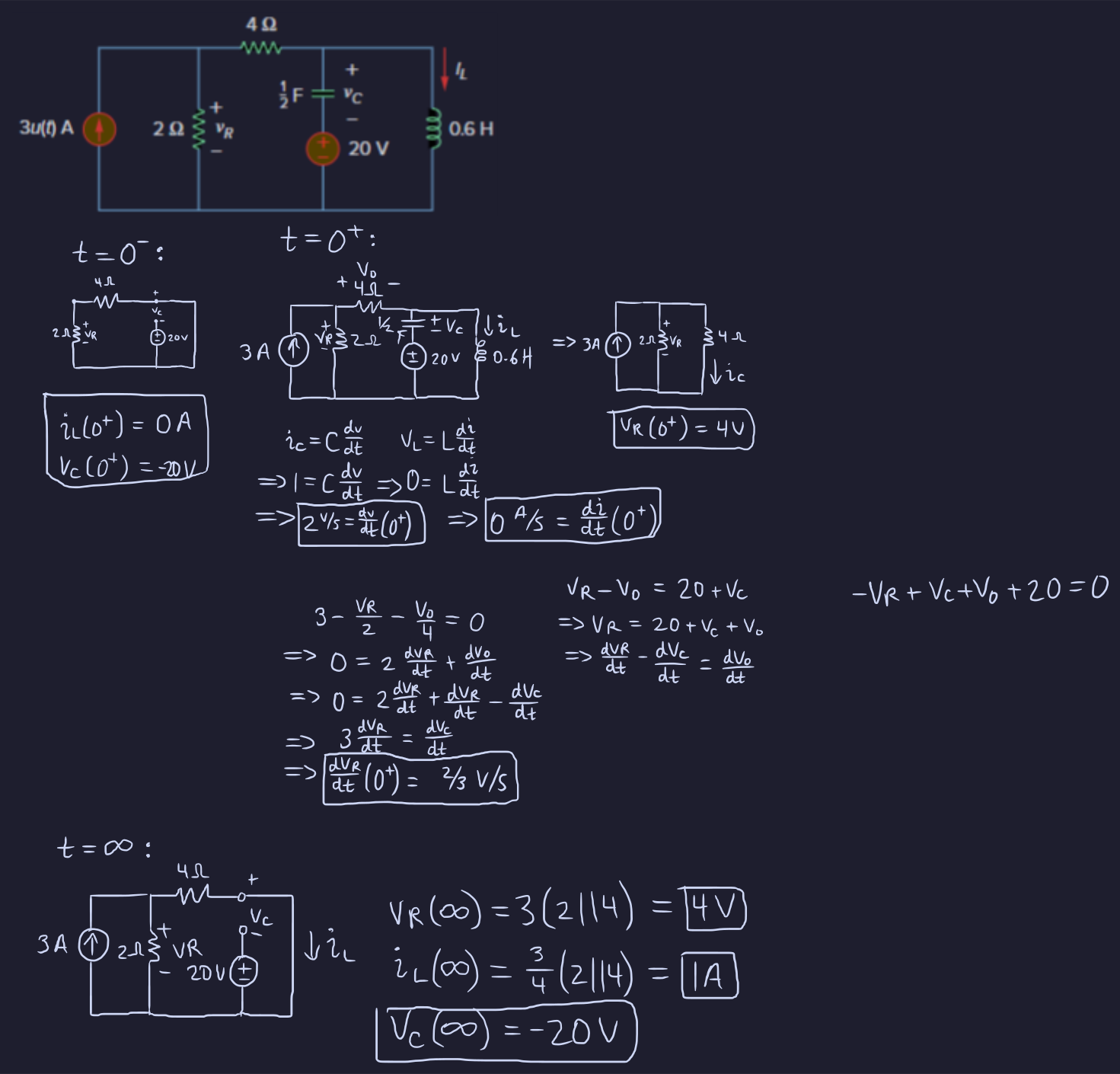
(Practice Problem 8.2
[Alexander & Sadiku, Fundamentals of Electric Circuits, 7th ed., p. 343])
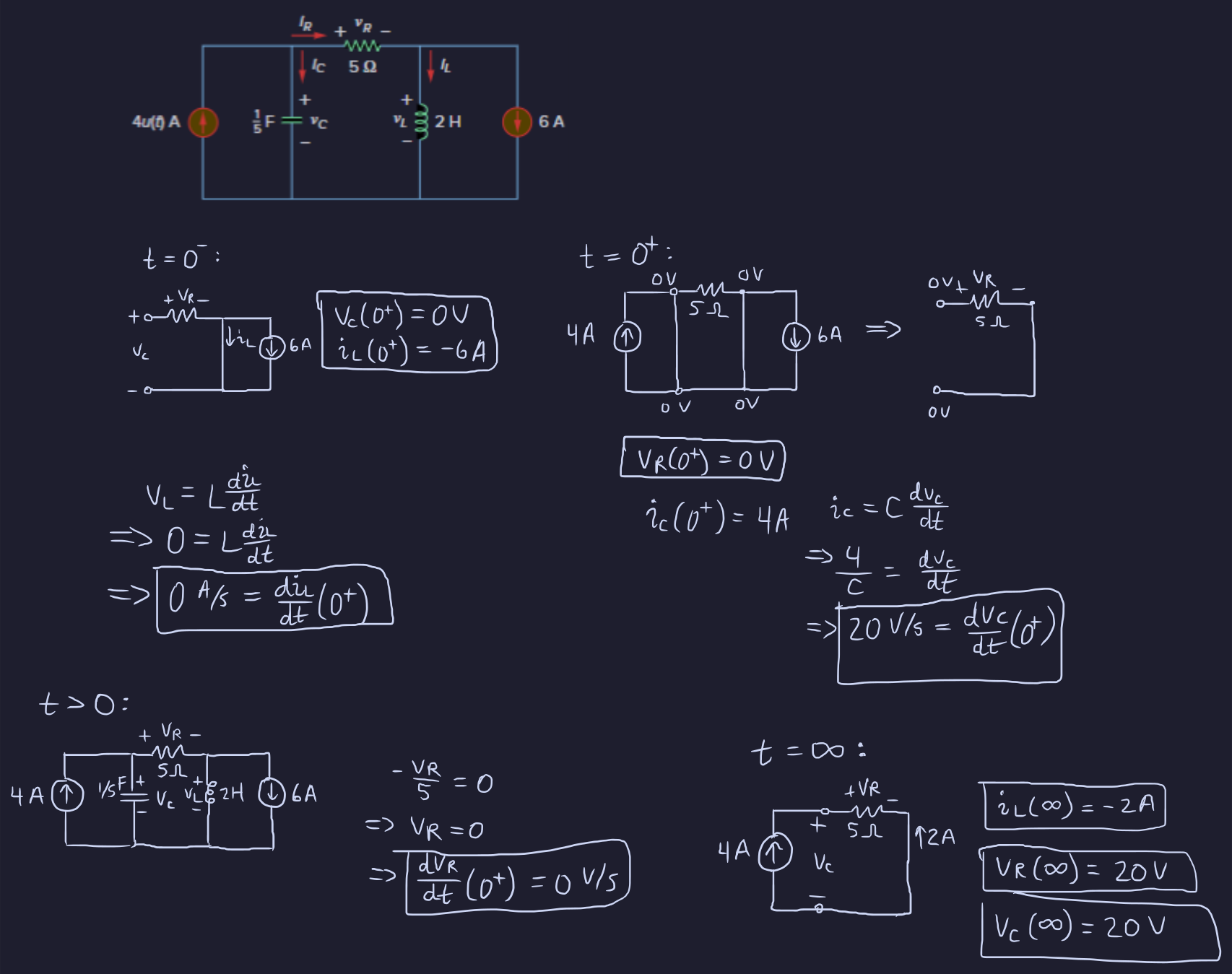
Natural Response of Series RLC Circuit
-
Use KVL to obtain the characteristic equation
-
Use initial conditions to solve for $A_{1}$ and $A_{2}$
-
Trying to solve for the shared current, $i(t)$
-
Characteristic equation:
- Roots (natural frequencies): $s_{1, 2} = -\alpha \pm \sqrt{ a^2 - \omega_{0}^2}$ where $\alpha = \frac{1}{2} \frac{R}{L}$ and $\omega_{0} = \frac{1}{\sqrt{ LC }}$
Damping
- The gradual loss of initial stored energy, evidenced by the decrease in the amplitude of the response
- Dependent on the value of $R$; if there is no $R$, $\alpha = 0$
Overdamped $(\alpha > \omega_{0})$
- Both roots are negative and real
- Decays the slowest
Critically Damped $(\alpha = \omega_{0})$
- Decays the quickest without any ringing
Underdamped $(\alpha < \omega_{0})$
- Two imaginary roots
- Oscillatory response (ringing) due to the storage devices transferring energy to each other
- This means $s_{1, 2} = -\alpha \pm \sqrt{-(\omega_{0}^2 - \alpha^2)} = -\alpha \pm j \omega_{d}$
(Example 8.3
[Alexander & Sadiku, Fundamentals of Electric Circuits, 7th ed., p. 348])
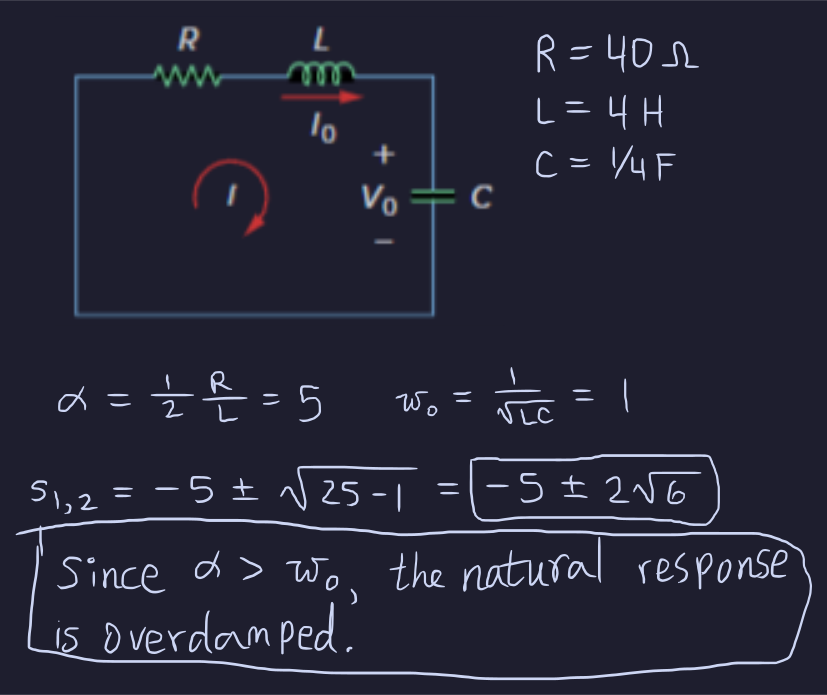
(Practice Problem 8.3
[Alexander & Sadiku, Fundamentals of Electric Circuits, 7th ed., p. 348])
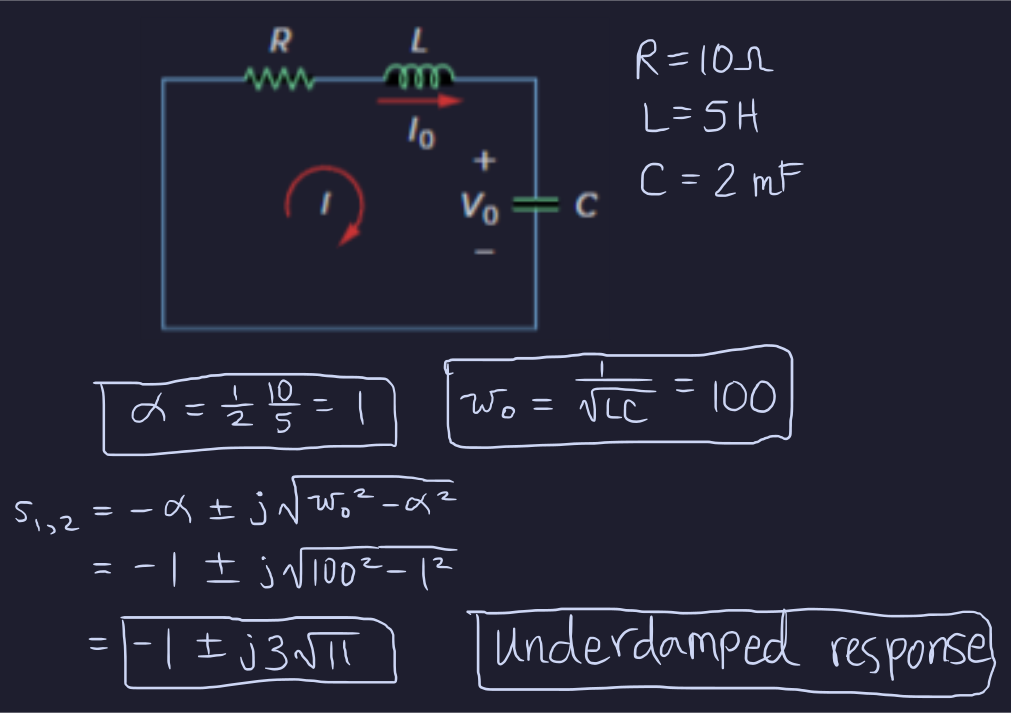
(Example 8.4
[Alexander & Sadiku, Fundamentals of Electric Circuits, 7th ed., p. 348])
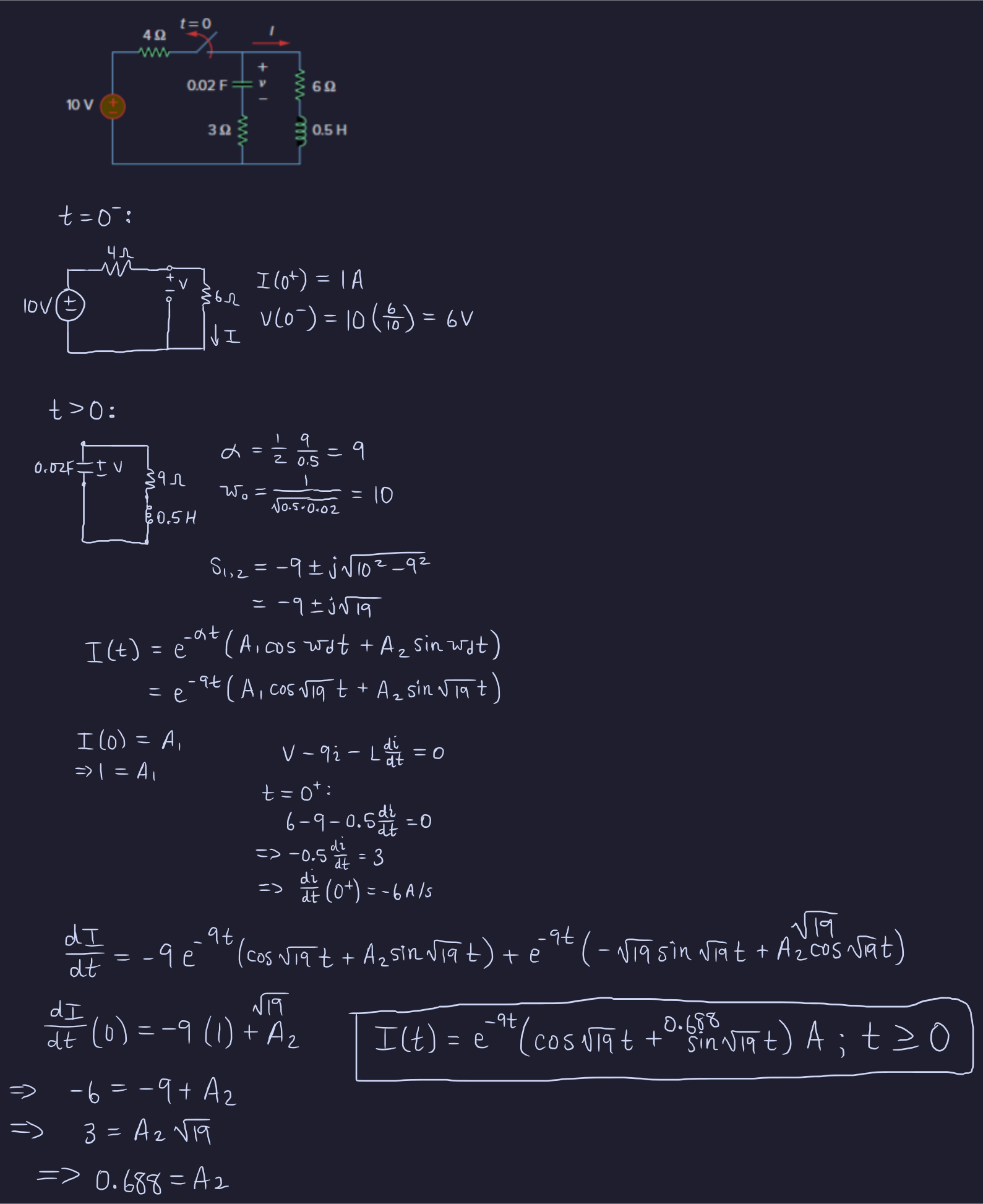
(Practice Problem 8.4
[Alexander & Sadiku, Fundamentals of Electric Circuits, 7th ed., p. 350])
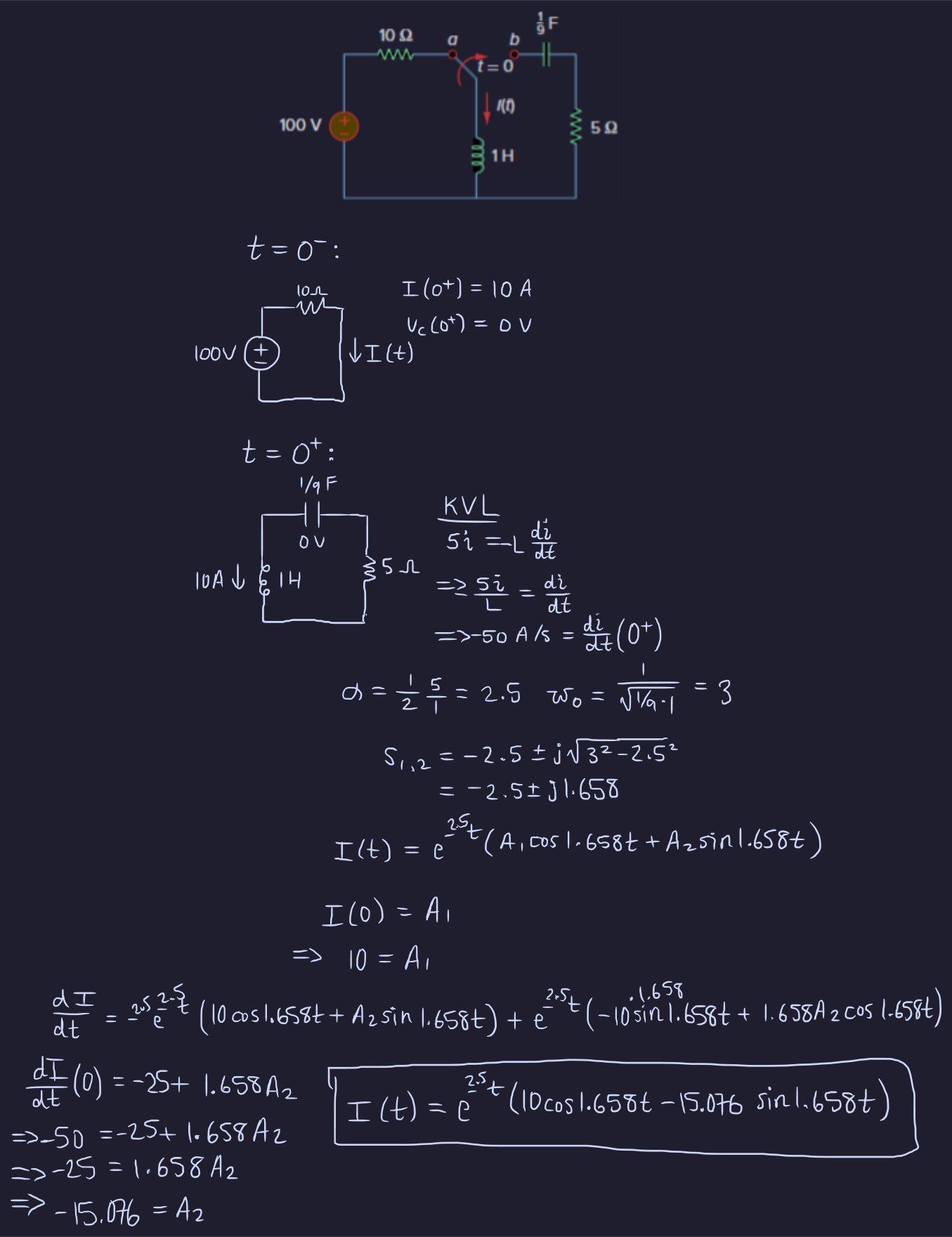
Natural Response of Parallel RLC Circuit
-
Use KCL to obtain the characteristic equation
-
Use initial conditions to solve for $A_{1}$ and $A_{2}$
-
Dampening cases remain the same
-
Trying to solve for the shared voltage, $v(t)$
-
Characteristic equation:
- Natural frequencies: $s_{1, 2} = -\alpha \pm \sqrt{ a^2 - \omega_{0}^2}$ where $\alpha = \frac{1}{2} \frac{1}{RC}$ and $\omega_{0} = \frac{1}{\sqrt{ LC }}$
(Example 8.5
[Alexander & Sadiku, Fundamentals of Electric Circuits, 7th ed., p. 352])
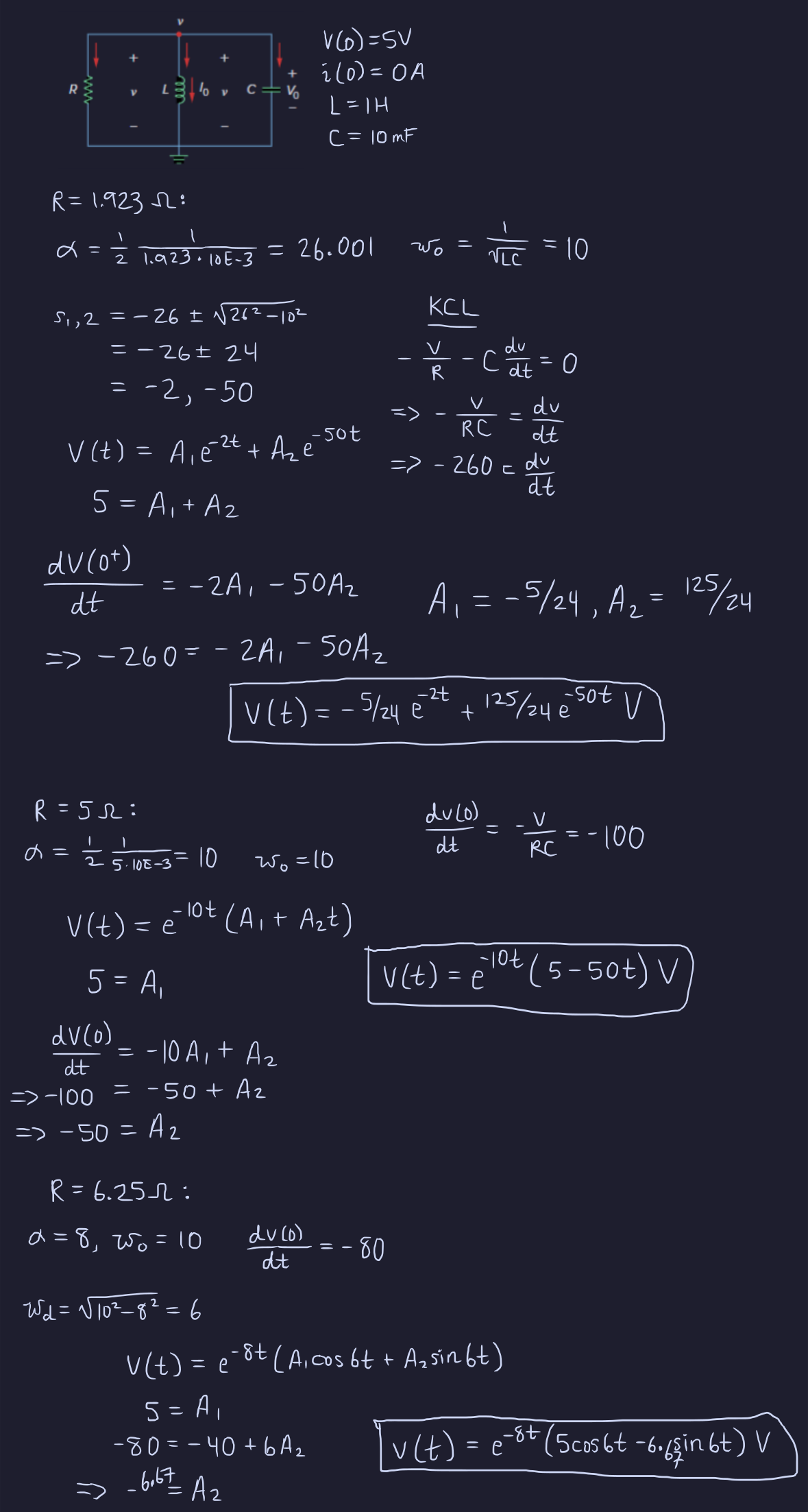
(Practice Problem 8.5
[Alexander & Sadiku, Fundamentals of Electric Circuits, 7th ed., p. 354])
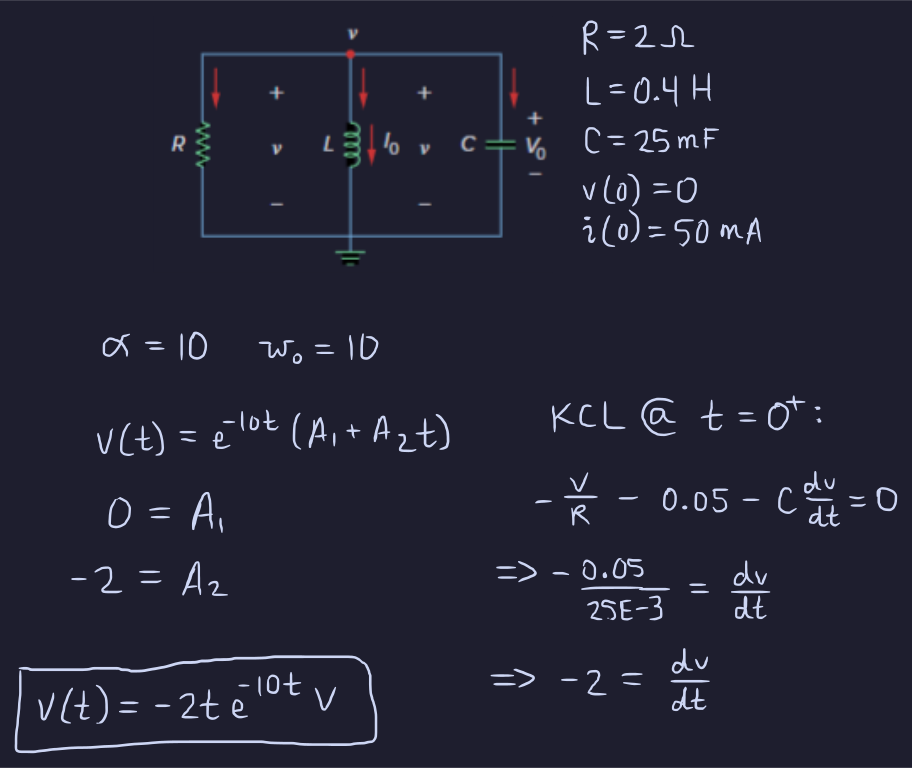
(Example 8.6
[Alexander & Sadiku, Fundamentals of Electric Circuits, 7th ed., p. 354])
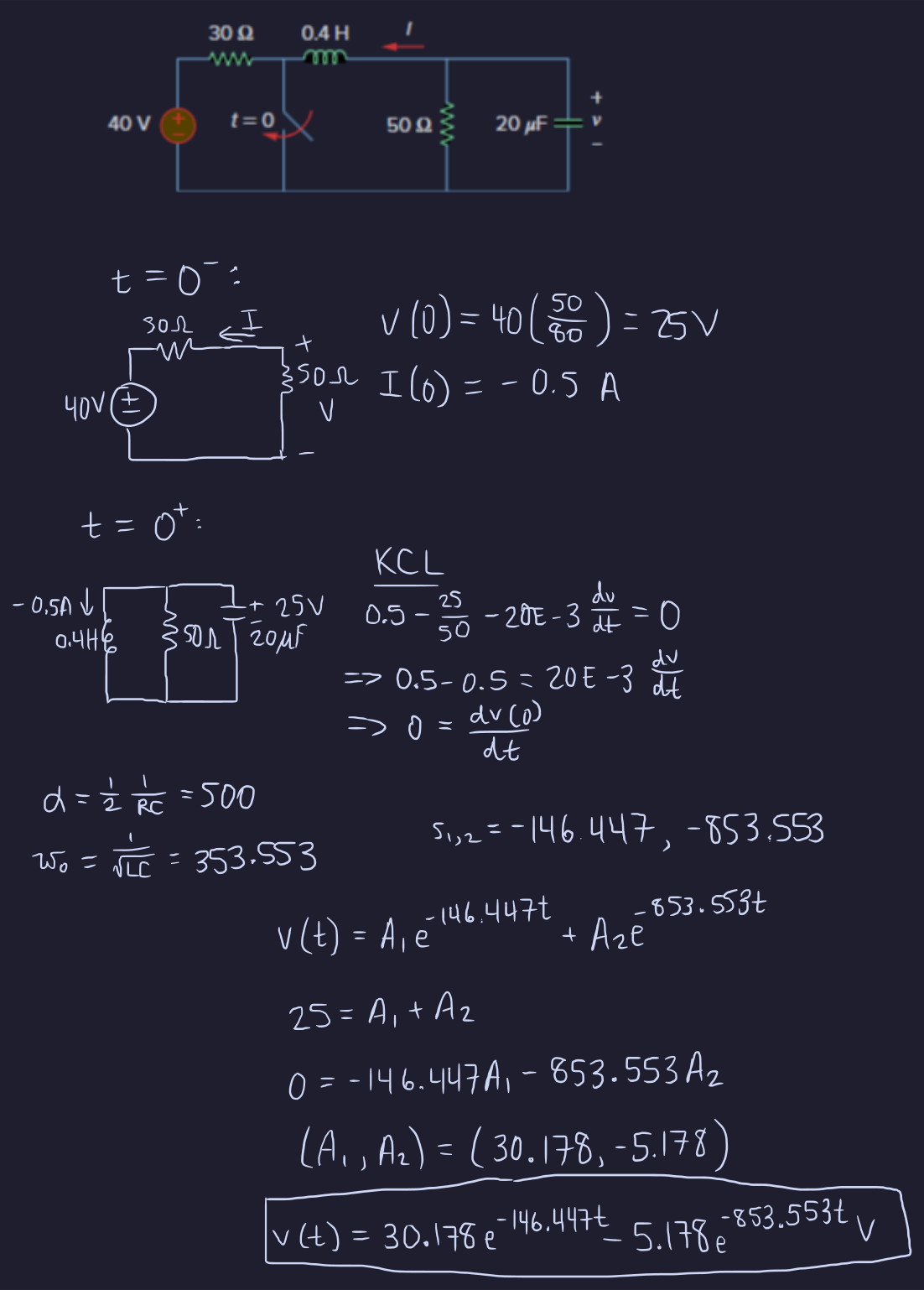
(Practice Problem 8.6
[Alexander & Sadiku, Fundamentals of Electric Circuits, 7th ed., p. 355])
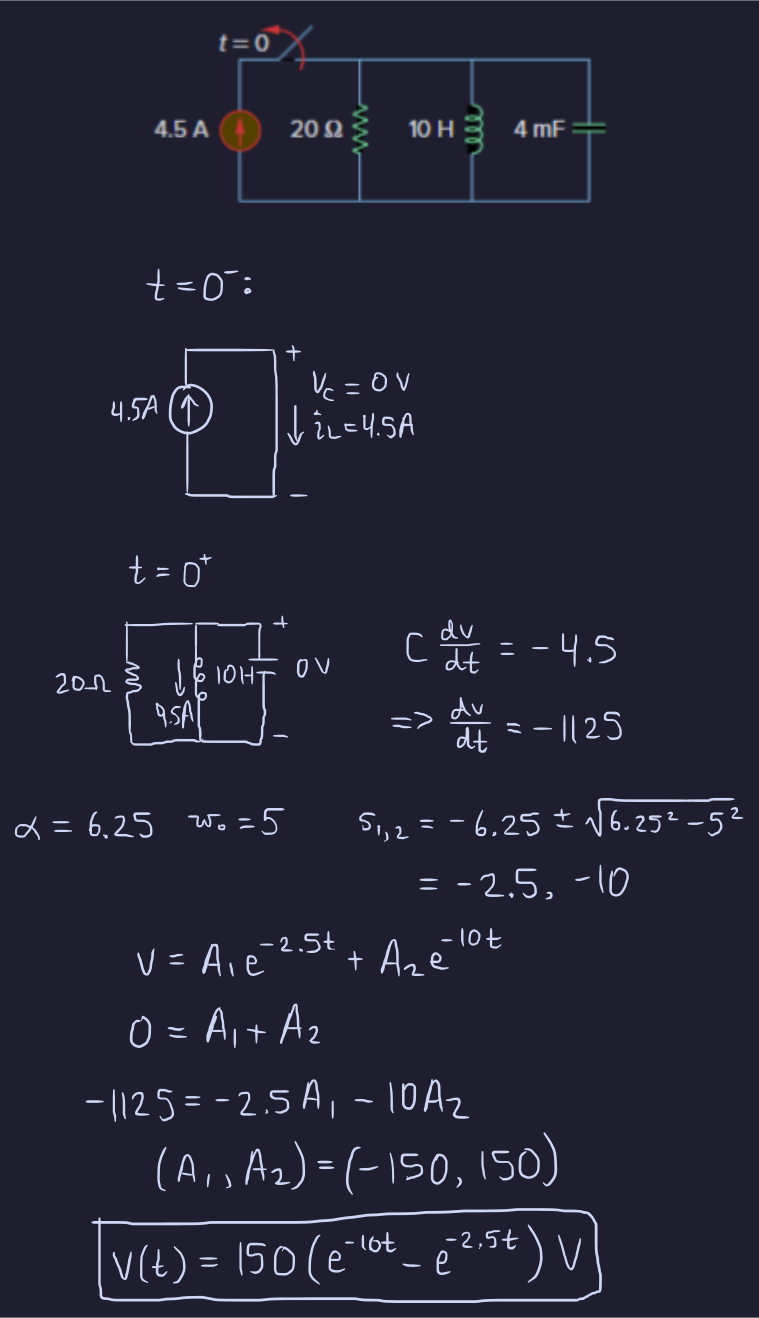
Step Response of Series RLC Circuit
- Superposition of the natural response (transient response) and steady-state response $v(\infty)$
- However, we are now evaluating the voltage response of the capacitor and not the shared current
(Example 8.7
[Alexander & Sadiku, Fundamentals of Electric Circuits, 7th ed., p. 357])
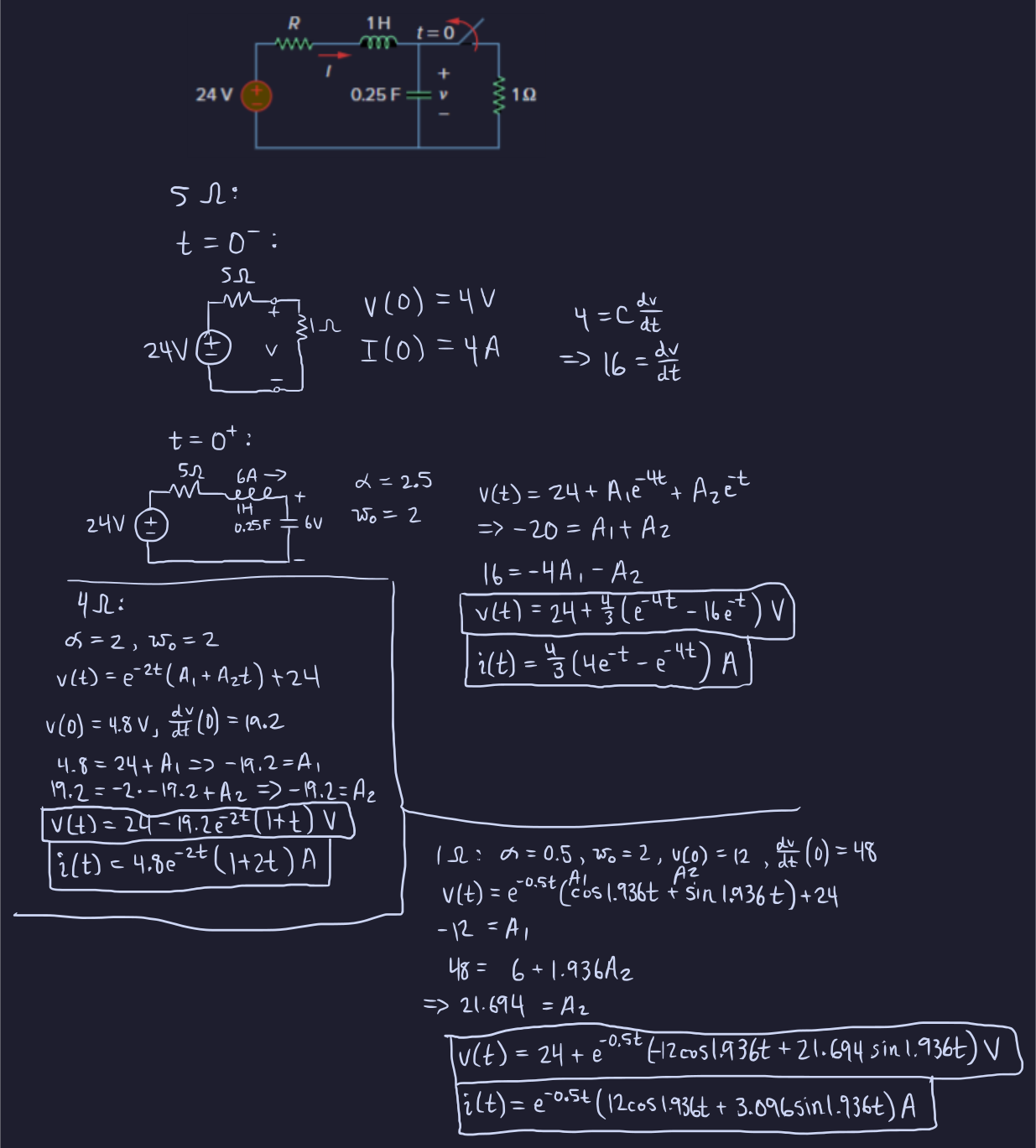
(Practice Problem 8.7
[Alexander & Sadiku, Fundamentals of Electric Circuits, 7th ed., p. 360])
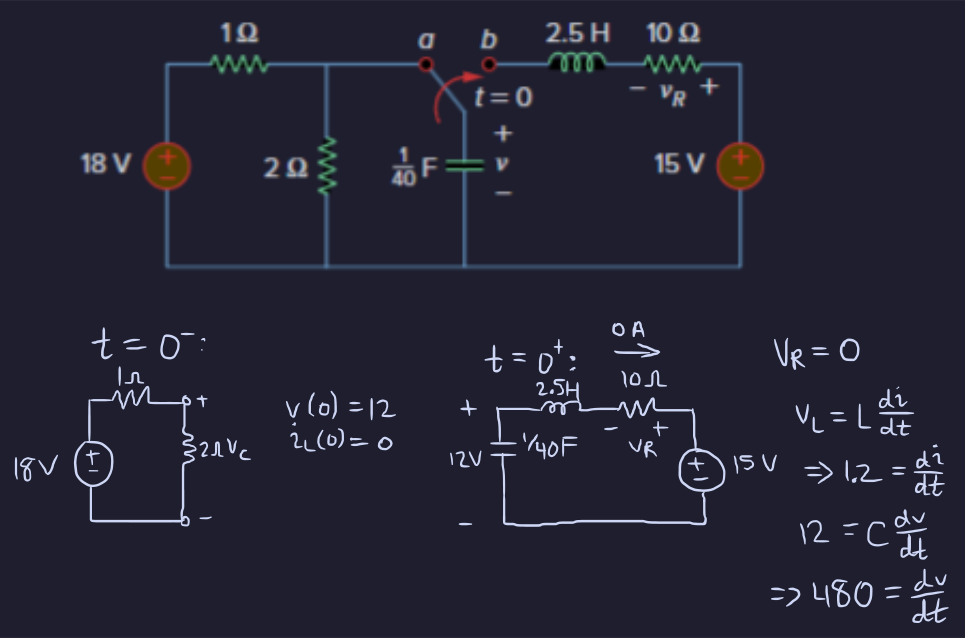
Step Response of Parallel RLC Circuit
- Current response is equal to the transient response and the steady-state response $i(\infty)$
(Example 8.8
[Alexander & Sadiku, Fundamentals of Electric Circuits, 7th ed., p. 361])
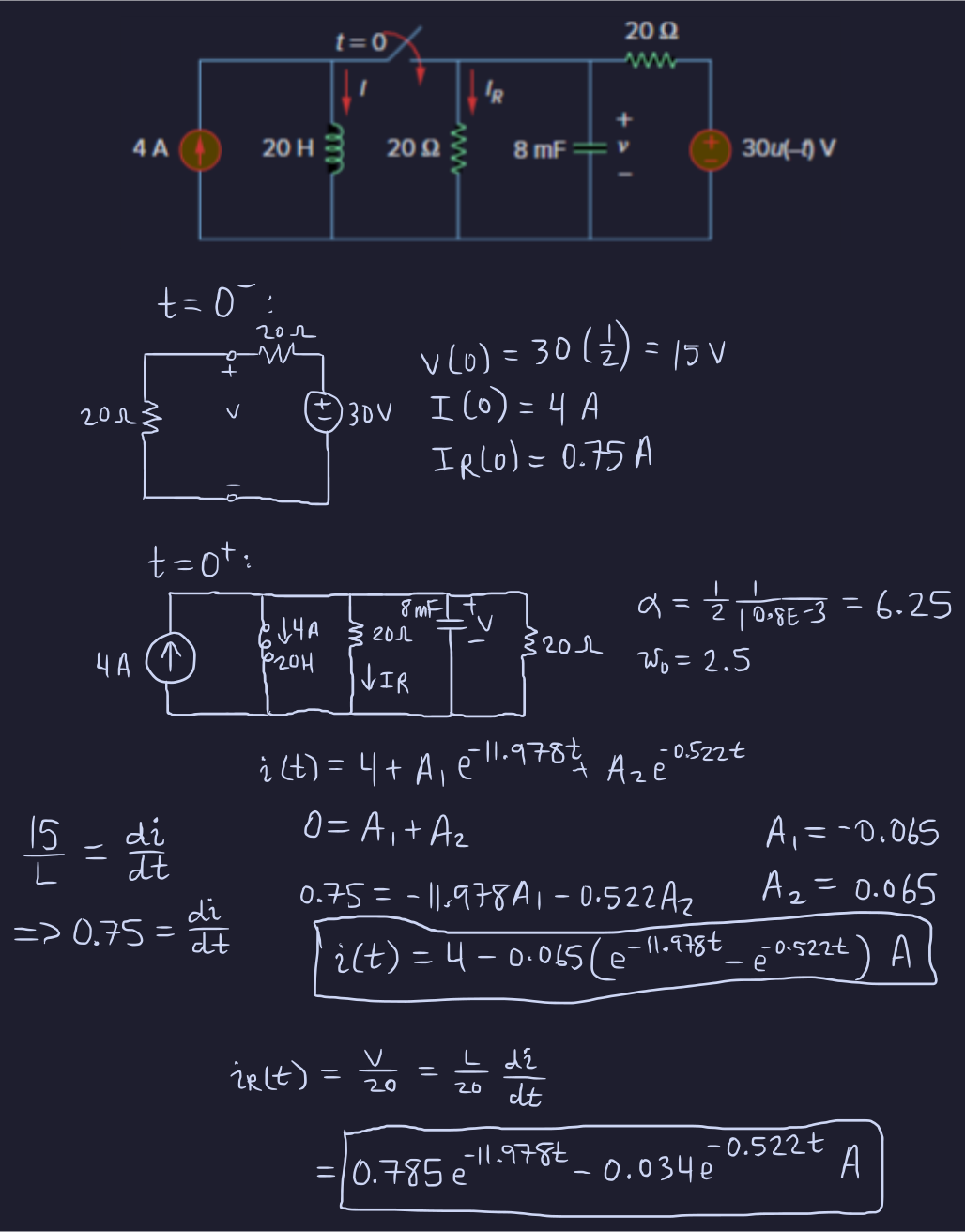
(Practice Problem 8.8
[Alexander & Sadiku, Fundamentals of Electric Circuits, 7th ed., p. 363])
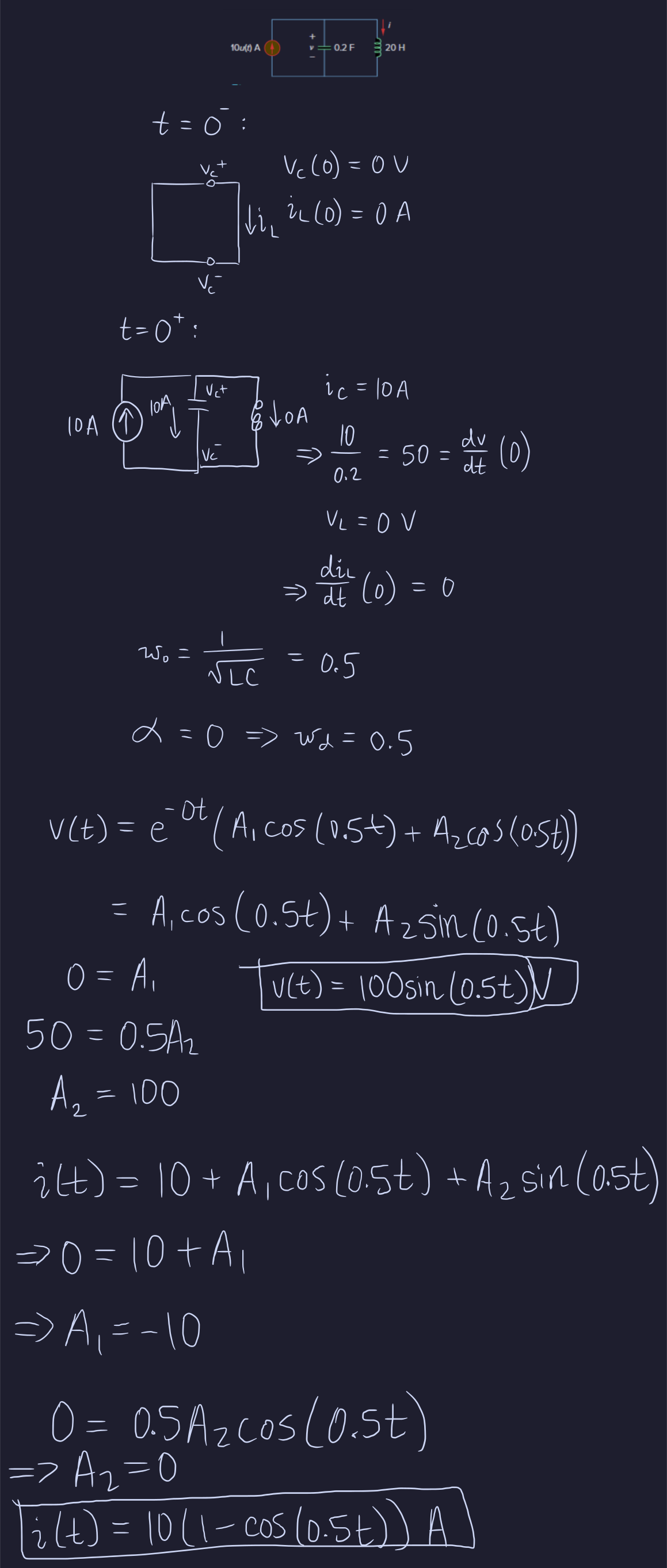
General Second-Order Circuits
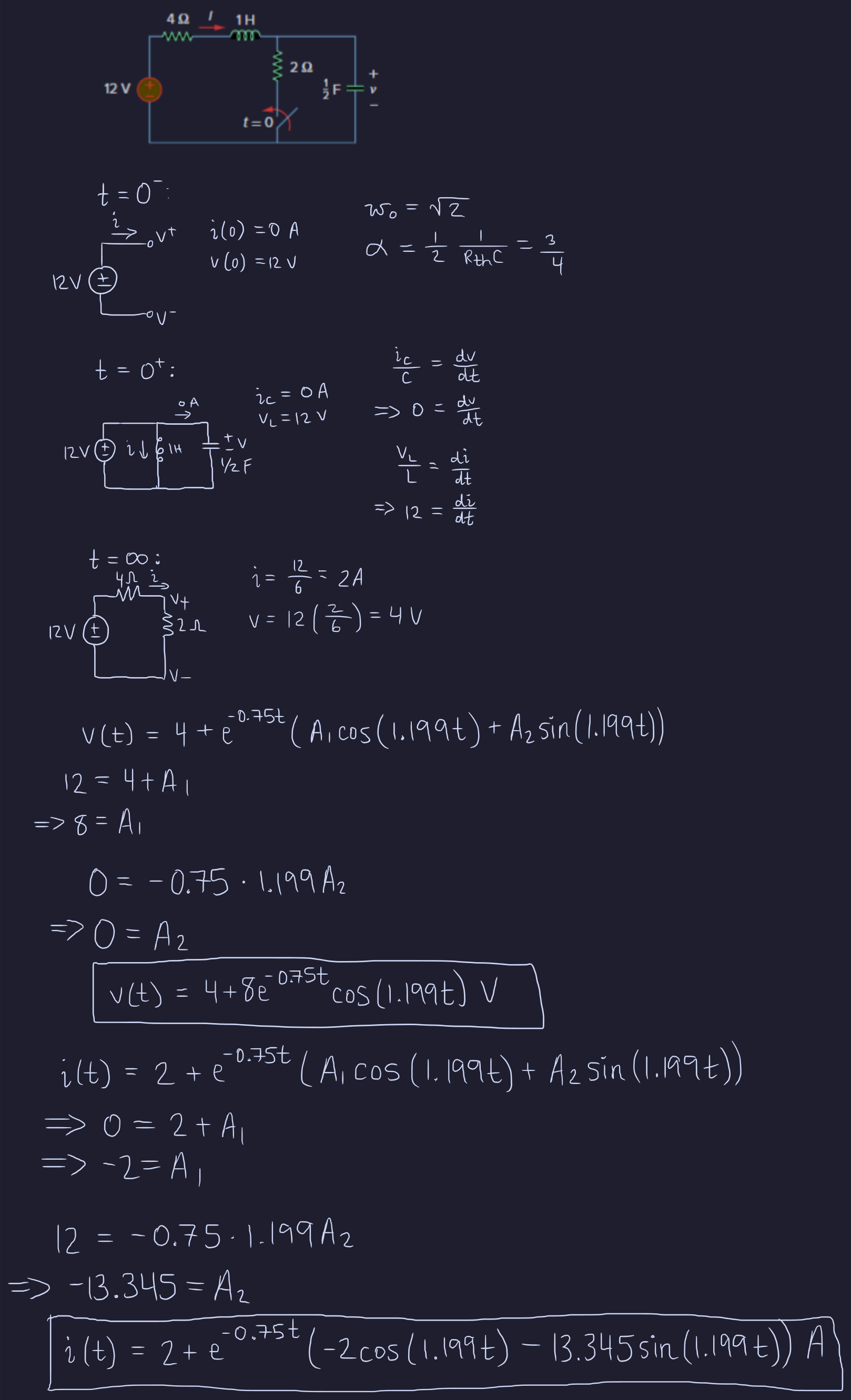
- Our approach for analyzing series/parallel RLC circuits may be extended for any second-order circuit:
- Evaluate the initial conditions $(x(0), \frac{\mathrm{d}x}{\mathrm{d}t}(0))$ and steady-state response $(x(\infty))$
- Turn off all independent sources and obtain the transient response using KCL/KVL
- Determine the characteristic roots of the resulting differential equation
- The entire response is the sum of the transient response and steady-state response
(Example 8.9
[Alexander & Sadiku, Fundamentals of Electric Circuits, 7th ed., p. 363])
Sources
- Alexander & Sadiku, Fundamentals of Electric Circuits